An essay by Royffe.Flynn on the ritual of doing laundry
Washing clothes requires two essential components: dirty clothes and water. For this reason the earliest laundry sites were geographical in location. Laundry aligned with the shape of natural watercourses; in less economically developed communities across the world, people still travel to open water systems to wash their clothes.
As urban centres developed, so too did laundry provision. Ancient Romans began to formalise washing spaces through purpose built ‘fullonicas’. These structures housed large stone baths for soaking and smaller basins for trampling more set in stains. France has a long history of lavoirs. These large basins were similarly built on rivers and natural springs. Communities came together to scrub clothes on the sloping stone surrounds (1). First appearing in the 17th century for the use of the elite classes, these washing places became valuable communal laundry places after the French Revolution.
1
Roddier M. Lavoirs: Washhouses of Rural France. New York: Princeton Architectural Press; 2003. p.26.
Industrialisation in the 19th century enabled new scales of laundry. At a small scale, technological innovations were gradually developing more efficient washing devices for individual home use. At its most sizeable, mechanised commercial laundries were assembled. The poorer classes worked these wash houses, whilst for wealthier households, it was common to use commercial laundries for some, if not all, of the weekly washing.
Institutional buildings such as hospitals were constructed with purpose-built laundries and local authorities provided shared facilities for the poorer public. The first public washhouse in the UK was opened in 1842 by Liverpool City Corporation.
The first launderette or “Washateria” opened in Texas in 1934. The communal laundry had no mechanised washing machines, but offered serviced booths and the equipment for the household laundry load. Customers would pay per hour to use the facilities. Domestic machines continued to improve, however the Great Depression of the 1930s meant that typical households did not have the money to buy these expensive appliances. The richer in society purchased these machines to rent to the public – and so began the launderette as we have come to know it.
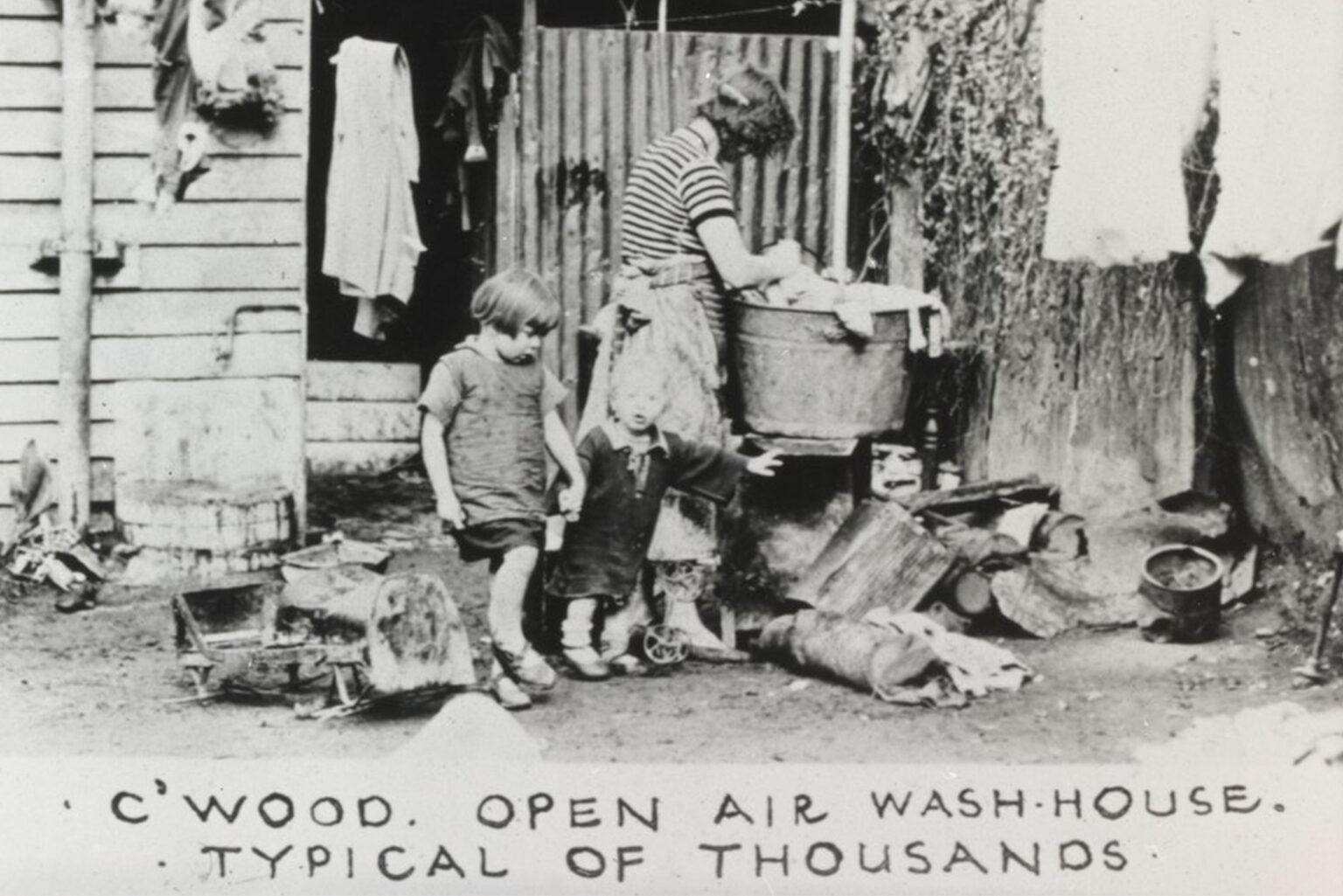
Image: Open air laundry, Melbourne. F. Oswald Barnett Collection, State Library of Victoria.
Whilst laundry routines changed little amongst the poor: “clothes boiled in a tub, scrubbed on the draining board, rinsed in the sink, put through a mangle, hung out to dry”; coin-operated laundry premiered in the UK at Central Wash, Bayswater in 1949 (2). Local newspapers reported: “Britain’s first self-service, coin-operated launderette opened, for a six month trial… All that housewives have to do is bring the washing, put it in the machine and come back 30 minutes later.” (3) By 1954, there were 700 in the country with 10 to 20 more opening weekly. (4)
As the launderette took off on high streets, post-war developments were also celebrating shared laundry facilities. With or without machines, washing places were given bright and accessible ground floor units or custom-designed laundry rooms. The clean, tidy spaces were presented as valuable community assets at the heart of new developments (apartment buildings in Sweden continue to be built with free shared laundry rooms as standard today).
Later in the 21st century, washing machines became a staple feature in suburban households worldwide. The kitchen of the 1950s and 1960s became a place of appliances. Each of these gadgets was marketed towards housekeepers, to whom they promised an easier life free from the grime and labour of everyday chores. Machine prices gradually dropped and incomes gradually increased. For this reason, the launderette became the washing place of those who could not afford, or could not fit, a machine in their home.
2
Kynaston D. Austerity Britain 1945-1951. London: Bloomsbury; 2007. p.19.
3
BT. May 9, 1949: Britain’s first launderette sets a revolution in motion [Internet]. 13th April 2017. [Accessed 28th February 2018]; Available from: Link
4
Mass-Observation. Coming Out in the Wash (April/May 1954) p.10.

Image: Washing machine advert illustration.
By the 1980s and 1990s, high rise and high density estates were suffering with unemployment and vandalism. (5) The coin-operated laundries, open 24 hours a day and with fewer attendants, were easy spots for crime. All of this marred society’s attitude towards the launderette; the stigma summed up in Bruce Robinson’s Paranoia in the Launderette:
“It was the worst one and a half hours of my life. The place was overrun with brats and terrible peroxide mothers. The moment I got through the door I found myself surrounded by brazen punters in whom all grace and etiquette had been routed. They exposed the unwashable. Loaded openly. Dried and folded without pride. Stains didn’t interest them. In fact they all seemed determined to show each other just how filthy their families could be.” (6)
5
Colquhoun I. The Riba Book of British Housing: 1900 to the Present Day. London: Architectural Press; 2008. p.26.
6
Robinson B. Paranoia in the Launderette. London: Bloomsbury; 1998. pp.20-21.
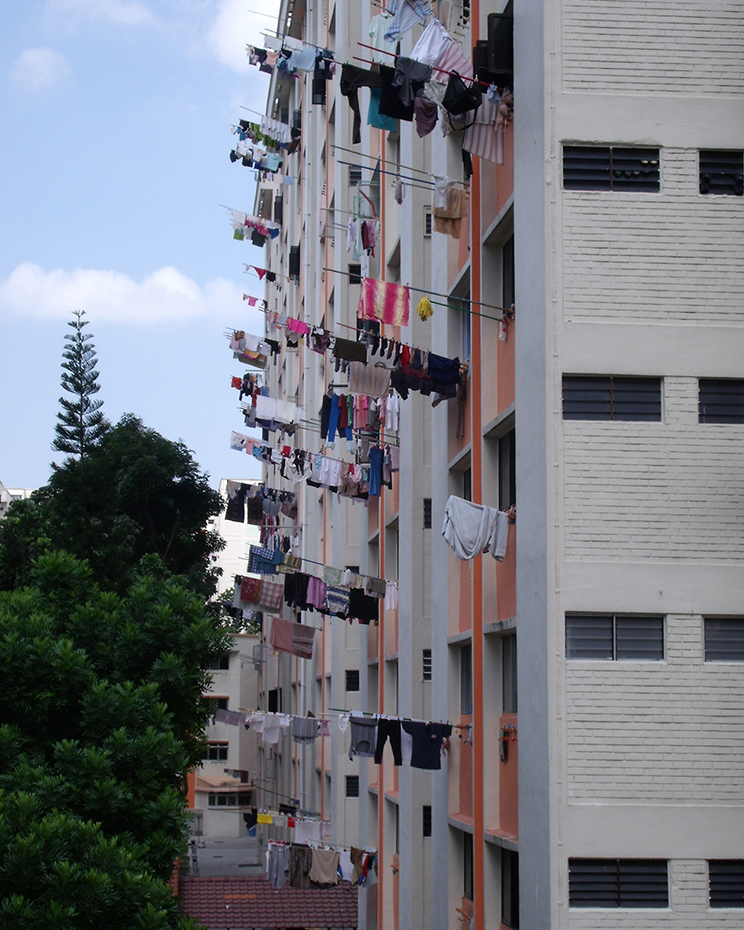
Image: Bamboo washing lines, Singapore. Kcdtsg [CC0] via Wikimedia Commons.
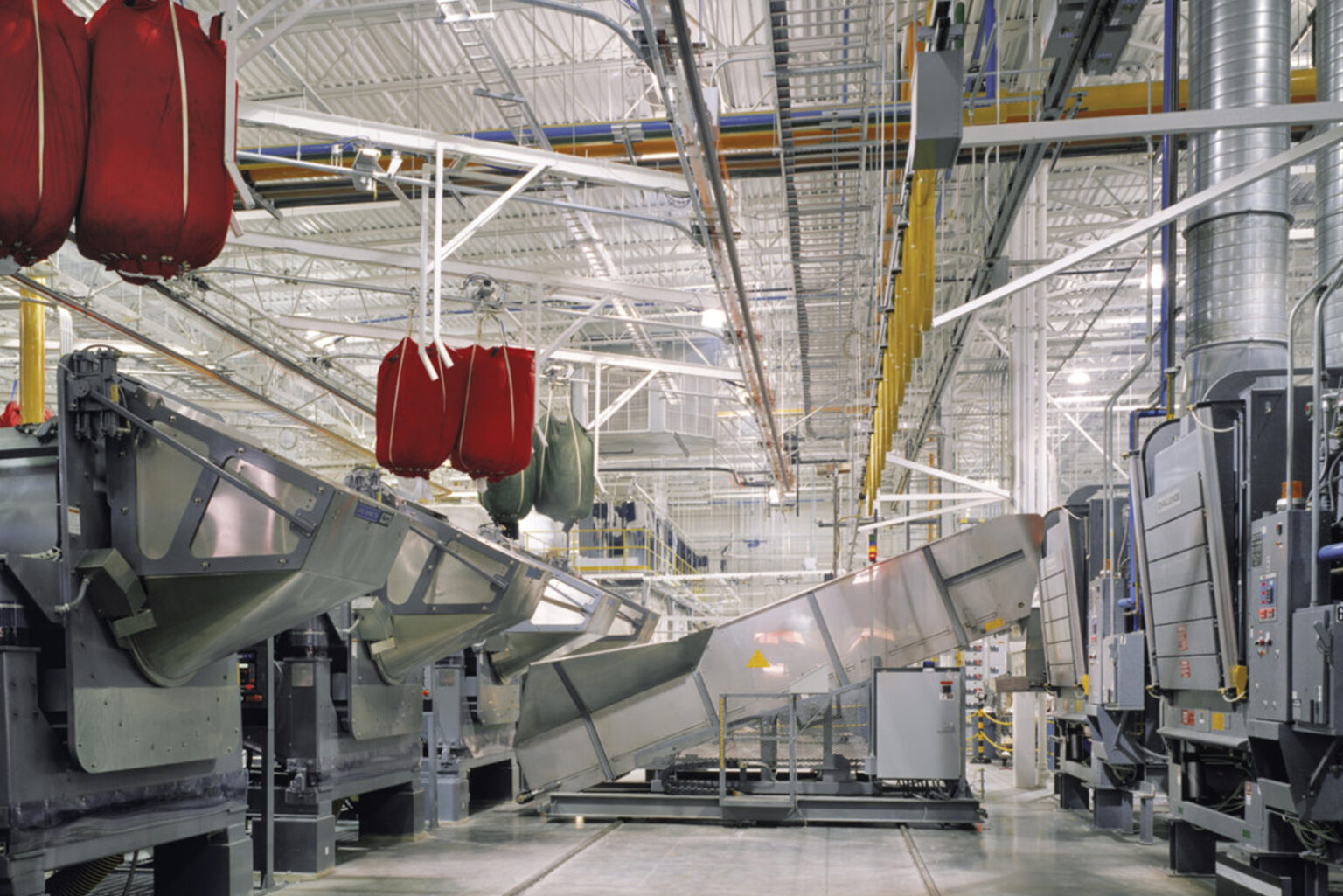
Image: Aramark Laundry, Chicago.
Despite a losing battle with the household machine and though dwindling in number, many launderettes have managed to cling on to the high streets. They are after all, essential services for students, the elderly, those in temporary accommodation, the household with the broken washer, the flat without space for a machine or simply for the wash of large loads. Many that have stood the test of time have gained important community value. The Boundary Community Launderette is one of these: voluntarily run by residents, the launderette was opened in 1990. The Shoreditch area has changed radically over the past decades and this humble launderette has continued to provide a stable public service and a centre of local activity.
By 2016, in the UK, the number of launderettes was just 3,000 (having reduced from 12,500 at the end of the 1970s). (7) In Japan however, the use of “coin laundries” is actually growing. In 2015 there were 16,693 laundromats in the country and every year since the number has increased. (8) Traditionally Japanese launderettes were located next to public bathhouses or sentos, but today the new laundry rooms are located in shopping centres and residential suburbs and are used by 10% of households. For years women did as their mothers practised and dried washing outside at all costs, but it seems that new generations are defying this act and opting for the convenience and speed of commercial machines. (9)
7
The Guardian. London’s launderettes are closing but their value and beauty remains [Internet]. 24th January 2016. [Accessed 28th February 2018]; Available from: Link
8
The Japan Times. Japan’s laundromat bubble shows no sign of bursting [Internet]. 12th November 2016. [Accessed 28th February 2018]; Available from: Link
9
The Financial Times. The riff: trend behind Japan’s boom in launderettes [Internet]. 21st October 2015. [Accessed 28th February 2018]; Available from: Link
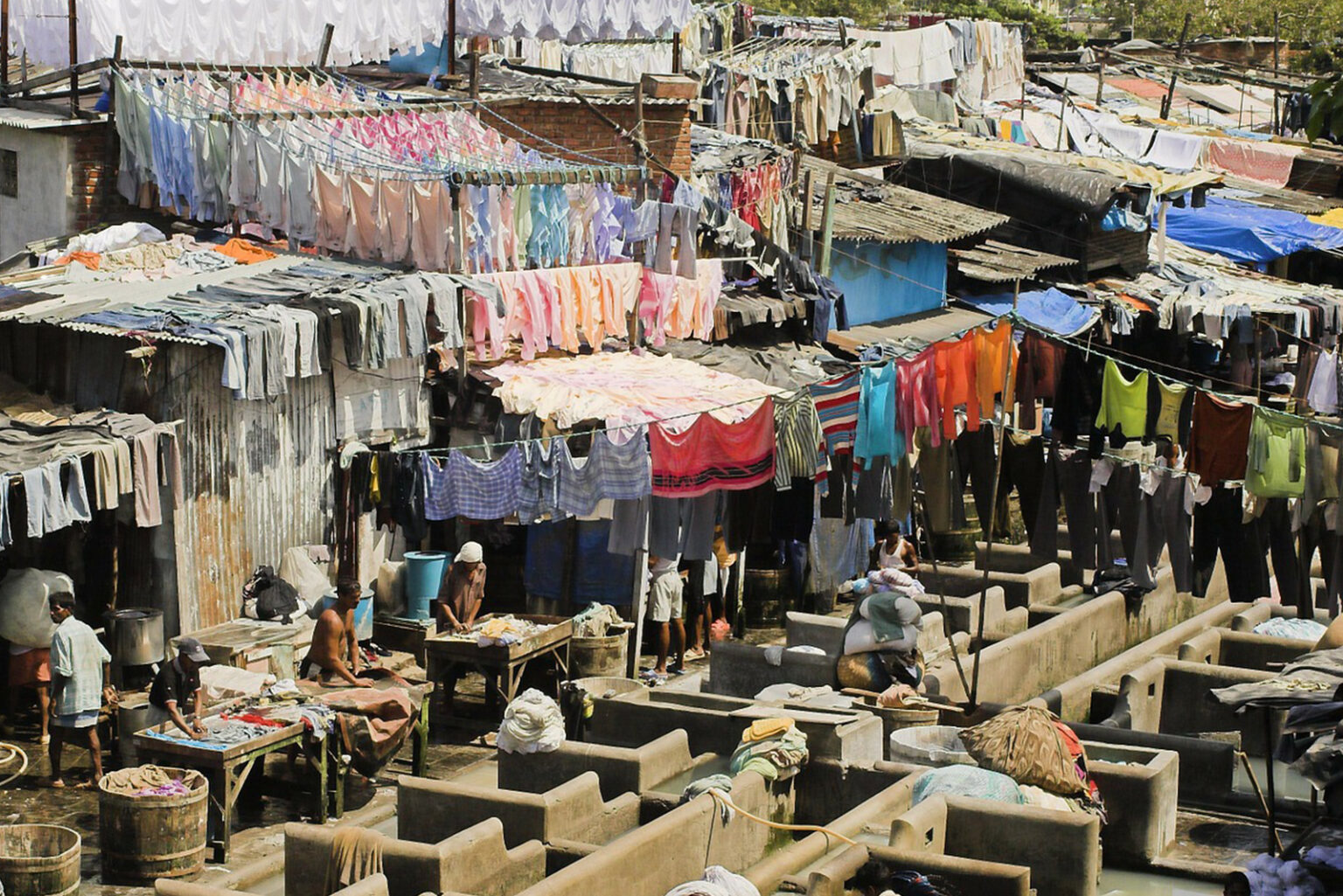
Image: Dhobi Ghat, Mumbai.
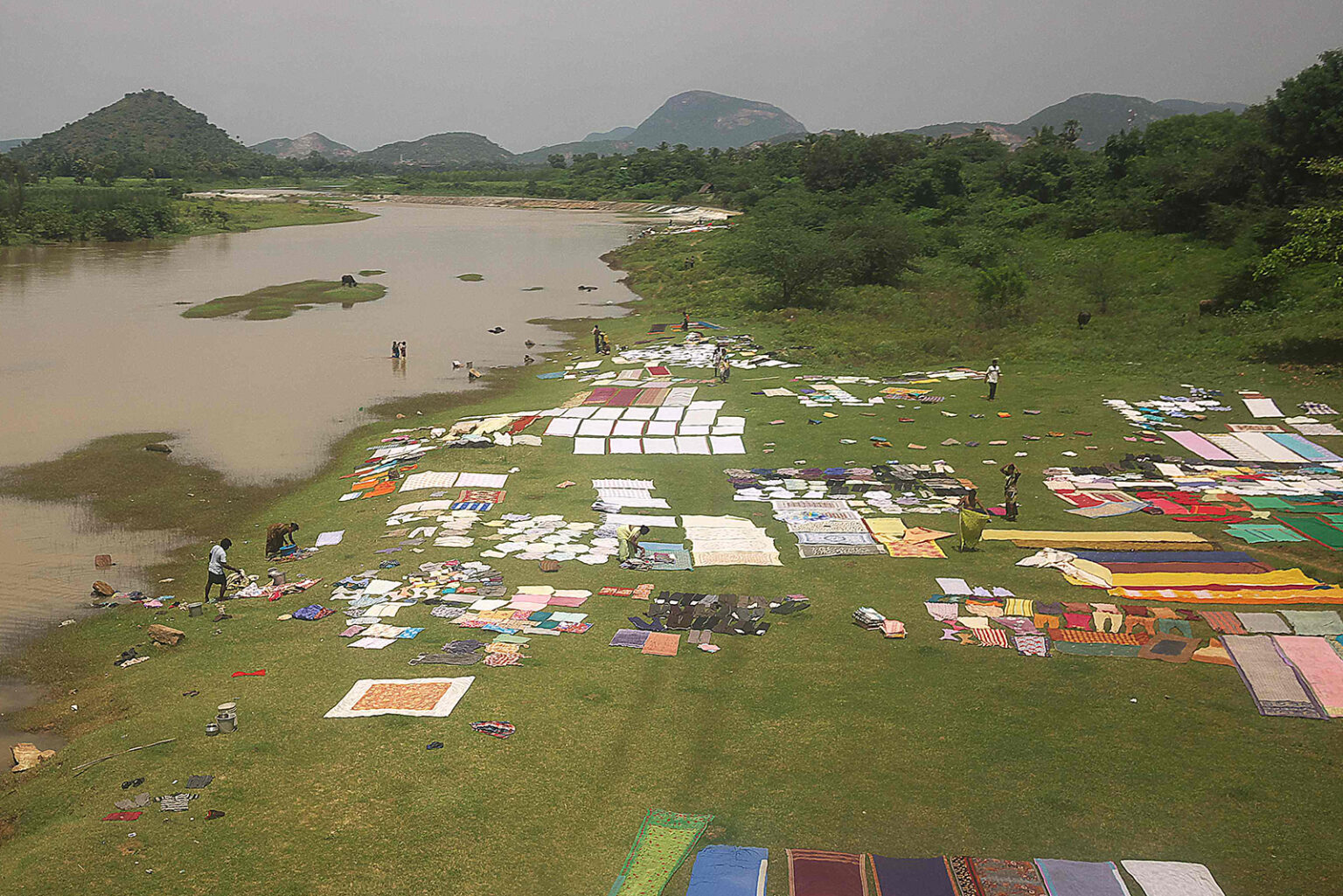
Image: Dhobi Wallahs, Kolkata. Photo by Mick Jennings.
Globally as a younger population grows up without the stigma of previous generations, launderettes are regaining value. Environmentally, there are obvious benefits to the larger loads that commercial washers offer. Financially, one doesn’t need to purchase and maintain a cumbersome piece of equipment. Culturally, as the British Pavilion at the 2016 Venice Biennale suggested, there are shifting attitudes towards pooling resources. The curators argued that “each apartment possessing its own vacuum cleaner is neither necessary, nor environmentally responsible” and that “sharing can be a form of luxury not a compromise.” (10)
Their provocations even suggested clothes might be shared amongst neighbours – an idea that would transform the frequency and practise of laundry.
Launderettes are offering this shifting customer base new services while they wait: from wifi to coffee, to games and performances. This appreciation for the communal laundry has the potential to return it to a widely used service once more. At the same time, laundry apps are offering efficient 24-hour services that withdraw the whole process of laundry from to-do lists and from sight.
Either way it seems that laundry could move out of our homes once more.