An essay by Rebecca Roke on valuing pluralism
A fragment of text by the Greek poet Archilochus reads: ‘The fox knows many things, but the hedgehog knows one big thing.’(1)
This sentence illustrates critical differences in the way humans process thought – and by extension, the way we create our built environments. The hedgehog in this case holds a single central vision; the fox’s is pluralist.
In other words, the fox draws on all manner of references to formulate its approach; she can be said to pursue contradictory, unrelated or centrifugal ideas that branch across many different territories. In this way, the fox represents many of the qualities of pluralism that this essay considers. Looking back over history, James Joyce, Ada Countess of Lovelace, William Shakespeare and Emilie du Châtelet (2) can be considered foxes. The etymology of pluralism encompasses the philosophical term expressing a theory where more than one ultimate principle is recognised. (3) In essence, pluralism encourages inclusiveness, rather than favouring a hierarchical structure of power that dictates a single best approach.
Is it possible to bring fox-like intent to developments today? Could an attitude of pluralism inform ways to alter the frequently linear approach to making spaces that we have become used to? Why might this quality of pluralism be important to consider in the twenty-first century? And, if we believe that breaking away from a singular outlook will benefit us and help us move toward making projects with multiplicity, how can we encourage creating a world that is ‘like a fox’?
Could this approach transform the way developments are commissioned, executed and inhabited to give greater variety in the results? Could it foster varied programmes that allow for participation by different genders, ethnicities, age groups and demographics?
Do foxes matter?
At first glance, it may seem easy to assume that pluralism is an important quality. The word conjures up themes that often receive lip service – ideas such as inclusiveness, tolerance, equality – but too often these words appease our social conscience without actually impacting our lived experience. What would our world be like if these qualities were made concrete?
For clues on the advantage and power of pluralism, we can look to the health of plants. Consider fields of wheat and maize, or the infinite variety of colour in dahlias, the scent and shapes of roses. Superior to their parent genes, these types of plants are frequently crossbred from pure lines and bear the essence of their breeding through heterosis, or hybrid vigour. This phenomenon was first amplified in the early twentieth century and continues to be used in horticulture today, creating enhanced plants by mixing genes. The resulting hybrids are biologically and physiologically stronger than their forebears: they have increased fertility, greater adaptation to environmental adversity, and higher resistance against disease and pests. The plants themselves are also taller, stronger, faster-growing and yield more abundant fruit, flowers or crops in comparison to their parents. So established are the benefits of heterosis that they are also used in animal husbandry. The fabled stamina and strength of a mule for example, is the consequence of its hybrid breeding, which crosses a Jack and a Mare.
To further imagine what pluralist qualities might look or feel like, we can contemplate Michel Foucault’s philosophy of heterotopia. His concept is premised on the idea that heterotopic spaces are those that are out of the ordinary. Foucault defines heterotopic ‘emplacements’ as spaces where the everyday and its accompanying rituals, expectations and habits are suspended. They interrupt our customary habit of dividing up the world into familiar taxonomies so that we can comprehend it by disobeying formal histories of order. (4) One example is the humble mattress and sheet; seen through the imaginative lens of a child the simple domestic objects turn into a boat at sea or a hut in the woods. Carnivals, theatres and festivals are another heterotopic typology recognised by Foucault and they poignantly illustrate how pluralist spaces might behave or misbehave. At carnivals or festivals, zoning rules that dictate appropriate distances or locations for places to eat, entertain, sleep or bathe are often interrupted. The effect is a cacophony of experiences set cheek by jowl within a single site. These mismatched, idiosyncratic and unexpected adjacencies defy our usual logic, juxtaposing functions that could be seen as incompatible in our everyday existence. This type of disruption parallels a pluralist way of creating places that dismantle expected hierarchies.
Worlds superimposed on each other with tangential realities can also be traced in Jane Jacobs’ life and writings about New York. Her essays and careful observations on everyday life in the 1960s culminated into her philosophy of the ‘intricate sidewalk ballet’. (5) A good city – like a good development – gives places where many different types of people can work, shop, play and live, all in the same block. In her view, a good city sidewalk ballet wasn’t the same in different locations, and even in the same place the dance would always contain new improvisations. (6) A good ballet in other words, was an ever-changing, always-animated, multivalent experience. In essence, she foresaw that the lively ecology of cities is rooted in ideas that come from many different realms, varied social positions, races and income levels and that when these un-alike contributions commingle in mutual support they create a vibrant concentration of activities and ideas.
Later, Jacobs would write her canonical work The Death and Life of Great American Cities – a key to the New Urbanist movement and set out guidelines for the fine-grain density that is essential to reviving or saving cities. The four main tools she promoted to encourage complexity within an orderly whole were all required for maximum effectiveness. They include: the presence of multiple functions along a street (mixed-use development); street blocks that are sized to suit human scale and use instead of cars; close-grained, varied building stock (the presence of old and new) with varied economic yields; and a sufficiently dense concentration of people, including those who dwell in the district. (7)
The practice of adopting this essential toolkit to make and re-make cities can be read as an approach comparable to the practice of heterosis. For civic complexity as much as for hybrid vigour in plants, greater variety creates growth that is stronger, fuller and more potent than its singular, linear alternative.
Having read the value of pluralism through the lens of heterosis, it seems apt to appreciate a contemporary urban intervention that illustrates an approach to create civic variety and growth through horticulture. Copenhagen’s Urban Gardens in the redeveloped suburb of Ørestad shows the impact, popularity and success of a simple, self-organized platform based on mobile gardens. The garden beds are built from inexpensive Euro pallet boxes, free to use and set on wheels, encouraging modest occupation of Ørestad’s unbuilt spaces. The beds give residents around 16 sqm of space to grow anything organic and the program has graduated into an organised, energetic system involving many residents. Growers planting in the raised, movable beds vary in demographic. Most plant vegetables yet each plot is different. This creates an uneven assemblage of plant, leaf, flower or fruit that blooms or ripens at different times. Enlivening the built environment, the living collage is coloured by the ebb and flow of seasonal abundance. The project is supported by simple communal infrastructure that includes tables, benches and a barbeque and shared garden tools for all to use. This simple gesture further enhances the social connection that the project promotes: friends and families have a place to meet, swap produce and share tips.
The popularity of the gardens, and the sense of community it has created, is evinced by its waiting list. Its simple non-hierarchical structure and free access communicates inclusiveness – an essential quality of plurality. It provides a deflected way in which to engage. Aided by the lubrication of having something in common, they offer a casual reason to interact with others. Even by simply sitting and observing birds or people, the shared thoroughfare of a garden contrasts with the increasingly isolated lives that individual are experiencing today. Further, interactions in gardens rarely require a fiscal transaction to enjoy. For those propagating the plot, it also offers a chance to share the benefits.
For the effort pluralism requires to think outside of accepted habits and defy dour circumspection, it’s worth asking the provocation: Does pluralism really matter? If we were to introduce multiplicity of race, gender, age and ability when we conceive and make spaces, how much better could our developments address the plural reality that is ‘we’ who inhabits the world. This ‘we’ is beautifully described by Italo Calvino: ‘Who are we, who is each one of us, if not a combinatorial of experiences, information, books we have read, things imagined? Each life is an encyclopaedia, a library, an inventory of objects, a series of styles and everything can be constantly shuffled and reordered in every way conceivable.’ (8)
Not only does this idea of ‘we’ appeal to a basic human acknowledgement that we all matter equally, heterogeneous viewpoints make good business sense. Sean Safford’s research comparing the North American towns of Youngstown, Ohio and Allentown, Pennsylvania is an instructive example of the economic benefit of diversity. Both were rust belt towns established in the 1800s and built on steel, with comparable sizes and economies that were facing decline by the mid-1950s. Consultants to both failing towns recommended that they diversify their industrial base: Allentown took the advice and actively attracted a range of new sectors for electronic, chemical and business parks all connected by an expanded transport network. Youngstown’s leaders ignored the advice. The city of Allentown is now 80 per cent larger and has 30 per cent greater median income than Youngstown.
Critically, Safford proposes that the social networks of the town’s leaders were the key to the difference between a city’s transformation or retardation. The civic leadership of Youngstown relied on a few distinguished white families with inward-looking, heavily overlapping social networks. By contrast, Allentown’s social and civic networks were highly varied and included representatives from universities, national bodies and CEOs of different races and classes who didn’t normally overlap with the commerce networks of others in the group. The varied outlook of the Allentown group meant that they had a broader worldview with greater connection beyond the town’s own small spheres of influence. Its pluralist outlook that valued difference saved the town and created marked growth. (9)
In the present day, pluralism continues to make financial sense. Recent research into board diversity proves that heterogeneous recruitment – especially for executive boards – outperforms boards run exclusively by white males. (10) (11) This evidence, consistently gained by large international companies conducting research from different research perspectives all points to the same result and further emphasises its truth. In particular, the research suggests that the inclusion of greater ethnic representation rewards companies with financial results around one-third greater than those without. (12)
To champion recruitment of people with different genders, from different parts of the world and of different lifestyles, ages, sexuality, religions, physical or mental health capabilities should be simple logic. If a truer range of the world’s population is represented within a company, it’s highly likely that the decisions the company takes will address a wider audience and therefore offer a competitive edge. Greater diversity creates a range of viewpoints and offers improved ‘bridging capital’ – that is, the effective ‘weak links’ among unrelated networks that are prevalent in strong businesses. Just as Allentown discovered, these links uncover a range of ways to accomplish tasks, investment or ideas rather than a singular, biased logic.
1
Isaiah Berlin, Russian Thinkers. London. 1976, 22.
2
Ironic though it seems that these female ‘foxes’ require introduction, it is important to flag up their achievements and vital contributions to our lives today despite strong societal pressure for them not to exhibit their intelligence. Equally, their general invisibility highlights the misapprehension of a sole (male) genius discovering an idea. Both Alan Turing and Albert Einstein had remarkable brains, but they also relied on work by Lovelace and Châtelet respectively to reach their breakthroughs.
‘Ada Lovelace’ as she was known was an avid mathematician and researcher who collaborated with Charles Babbage to conceive the Analytical Machine – an early ‘computer’ that Lovelace helped advance and introduce to others by understanding its varied uses, including the manipulation of symbols and creation of music. Her writings served as the basis for Alan Turing’s work in the 1940s shaping early ‘computers’ as we know them now. See Zeroes + Ones: Digital Women and the New Technoculture by Sadie Plant.
Emilie du Châtelet was born in 1706 and was highly intellectual – to her family and suitors’ dismay. Wealthy and bright, she eventually established a preeminent science lab in her husband’s country château where, along with her lover Voltaire, she battled a key question: What is energy? Winning the tussle between Leibniz and Newton’s contrasting views (which also threatened the prevailing religious view of the world) she methodically proved that E=mv2 – a discovery later used by Einstein to create his famous equation, E=mc2. See ‘C is for Celeritas’ in E=mc2 by David Bodanis, 55–69.
3
This theory is particularly applied in political science, especially by the British political theorist and socialist Harold J Laski, who used it to critique the idea of state sovereignty.
4
Heterotopia is originally a medical term referring to a particular tissue that develops at another place than is usual. The tissue is not diseased or particularly dangerous but merely placed elsewhere, a dislocation. Lax, F. (1998) ‘Heterotopia from a Biological and Medical Point of View’ in R. Ritter and B. Knaller-Vlay (eds.), Other Spaces. The Affair of the Heterotopia, Dokumente zur Architektur 10, Graz, Austria: Haus der Architektur, 114–123.
5
Jane Jacobs. Samuel Zipp, Nathan Storing (eds).Vital Little Plans; the Short Works of Jane Jacobs. Short Books Ltd. 2017
6
Jane Jacobs. The Death and Life of Great American Cities. Random House: New York. 1961, 50-54.
7
“The district … must serve more than one primary function; preferably more than two. They must ensure the presence of people who go outdoors on different schedules and are in the place for different purposes, but who are able to use many facilities in common; streets and opportunities to turn corners must be frequent; the district must mingle buildings that vary in age and condition … so that they vary in the economic yield they must produce. This mingling must be fairly close-grained; there must be a sufficiently dense concentration of people for whatever purposes they may be there … [including] residence.” Jane Jacobs. The Death and Life of Great American Cities. New York: Random House Inc. 1961. 150-151
8
Italo Calvino. ‘Multiplicity,’ Six Memos for the Next Millennium. Cambridge: Harvard University Press. 1988, 124.
9
See Sean Safford. Why the Garden Club Couldn’t Save Youngstown: Civic Infrastructure and Mobilization in Economic Crises. Cambridge, MA: MIT Press. 2004, 42, 45
10
Vivian Hunt, Dennis Layton, and Sara Prince. Why Diversity Matters. McKinsey. 2015. Available from: link.
11
Grant Thornton. Women in Business: the value of diversity. 2015
12
Mining for Talent. Price Waterhouse Coopers. 2015. Available from: link.

Image: A diverse landscape of Xanthorrhoea Anigozanthos and Xerochrysum at the Australian National Botanic Gardens, Canberra. From Molonglo's Canberra Study.
Why so many hedgehogs?
Reversing centuries of bias takes time and a great deal of energy, expense and intention – yet as examples such as Youngstown/Allentown or the widespread adoption of heterosis remind us, pluralism is a tool that is proven to be valuable and vital to vibrant future growth. Increased plurality in the decision-making process of those designing, legislating and funding place-making would optimistically allow for more projects that connect with a greater variety of people living, working and playing in them. This seemingly simple equation makes for obvious grounds to emphatically design and build from a more pluralist stance. What this doesn’t take into account is how strong we operate according to Hyperbolic Discounting. This state of mind is the human cognitive bias that tends to value present conditions more highly than future ones. This makes it more difficult to focus on large-scale or long-term problems, such as rising financial inequality or marked climatic changes: in other words, factors that accumulate slowly but have a marked effect over time.
Our silent unconscious favours a ‘sure thing’ over an unproven option, which is generally understood as risky, and therefore less valuable. This decision-making process happens in a split second and is as automatic as tying your shoelaces.
People unconsciously pay attention to only a small selection of what is around them and this necessary and healthy filter allows us to process the overwhelming amount of information we sift through daily. Unfortunately, it also introduces a blind, subtle bias to what we see around us. The unexpected results of Brexit, for example, or the United States presidential result of 2016 are two political events that reveal just how silo-ed a nation’s thoughts, conversation and expectations can be. Instead of the rational, objective and logical point of view that we assume we hold, in reality, our brains are riddled with errors, mental shortcuts and blind spots that we are mostly unaware of and that filter our version of events.
This also goes some way to explaining why a pluralist stance is absent from much development. A brief survey of the status quo of contemporary built environments, particularly in western cultures, has long been biased towards white males. From the way buildings are procured, tendered, designed, legislated and constructed this is borne out by anecdote, facts and myth. Think of the widely circulated photo of Le Corbusier with his ‘hand of god’ hovering over a 1920s La Ville Radieuse housing model. This charged image succinctly communicates the prevailing paradigm.
Books, research and surveys bear out this bias. Craig L Wilkin’s Diversity Among Architects, for example, tackles the lack of ethnic variety in the North American building industry and highlights hegemony as the de facto order of the day. (13) As in the UK or USA, in Australia, there is near invisibility for minority ethnic role models shaping the built environment. (14) (15) In Australia, the present paucity of Indigenous architects robs us of understanding the vast and rich range of mythologies about different ways to live. (16) What is needed to create visibility and role models in the industry for Indigenous people?
Similarly, women are marginalised in making, imagining, participating and especially leading how our built environment is shaped, despite gender parity for graduates. (17) Fissures become canyons as women progress with their careers with three main pressures shaping the disparity: unequal pay; unequal mentoring; and unequal promotion. These dovetail with an underlying societal bias against women working in construction. (18) (19) How many female labourers, site forewomen or architectural CEOs can you cite? Adding to this pattern is widespread bias towards white males in tertiary curricula where historic achievements of women or minorities are regularly marginalised. (20) Based on the known effect of Hyperbolic Discounting, it’s not surprising to find that these deep-rooted biases are difficult to alter because they are long-held societal habits, they are institutional in nature and are therefore typically slow to change. (21)
As the Allenstown example reminds us, when we allow habitually forgotten players to address wider audiences with their wonderfully distinctive voices and opinions, we encourage an enriched broad-minded attitude to place making. Therefore, women and minority groups must be able to advance their careers, hold senior positions, gain prominence and speak out. This will happen through practical measures such as fair sponsorship, equal chances to lead high-profile projects and dedicated mentoring from those who have succeeded. As American technology executive, activist and author Sheryl Sandberg points out, mentors and sponsors tend to prefer coaching protégés who are most similar to themselves – and presently, because men predominate in powerful positions, this means men are more widely mentored. (22) Just as men benefit hugely from mentoring and enthusiastic sponsors, so do marginalised groups across all professions. (23)
We need to radically re-imagine the way we support and champion contributions from marginalised points of view. This might mean better and more flexible working hours for women with family responsibilities. It might allow for more diverse viewpoints when taking significant decisions. Could it even allow a rethink of how we relate to human scale beyond the established metrics of ‘the Neufert’ architectural data? The size of doors, the heft of handles, the ‘median’ choices that we often unconsciously incorporate in design may be increasingly up for review. In essence, this change in attitude points to the conclusion of established research: there can be something for everybody when everybody contributes to a project.
13
Craig L Wilkins, Diversity Among Architects: From Margin to Center. New York and London: Routledge. 2016, 134.
14
‘Only 2 percent of practicing architects are ethnic minorities.’ Commission for Architecture and the Built Environment. Architecture and Race: A study of black and minority ethnic students in the profession. 2005, 74
15
Merlin Fulcher, ‘UK architects are 94 per cent white’, Architects Journal, 2012.
16
AACA Architecture in Australia, ‘Industry Profile’, AACA Report. June 2015, 4.
17
Jane Duncan, ‘Diversity or Bust.’ RIBA Journal. October 2015, 85.
18
Gill Matthewson, Mind the Gap, 16 March 2016. Available from: link.
19
Despina Stratigakos. ‘The Sad State of Gender Equity in the Architectural Profession’. Where are the Women Architects? New Jersey: Princeton Architectural Press. 2016. p.35
20
Despina Stratigakos. ‘The Sad State of Gender Equity in the Architectural Profession’. Where are the Women Architects? (New Jersey: Princeton Architectural Press) 2016. P.23-24.
21
Craig L. Wilkins. “Twisted: Signature Commissions,” Diversity Among Architects From Margin to Center. New York and London: Routledge. 2016. P.129
22
Sheryl Sandberg, Lean In: Women, Work and the Will to Lead. (New York: Knopf, 2013), 66-67, 71.
23
For an excellent description of the difference between and importance of sponsors and mentors see: Tiffany Dufu, ‘What Matters Most’ in Drop the Ball. New York: Flatiron Books. 2017.
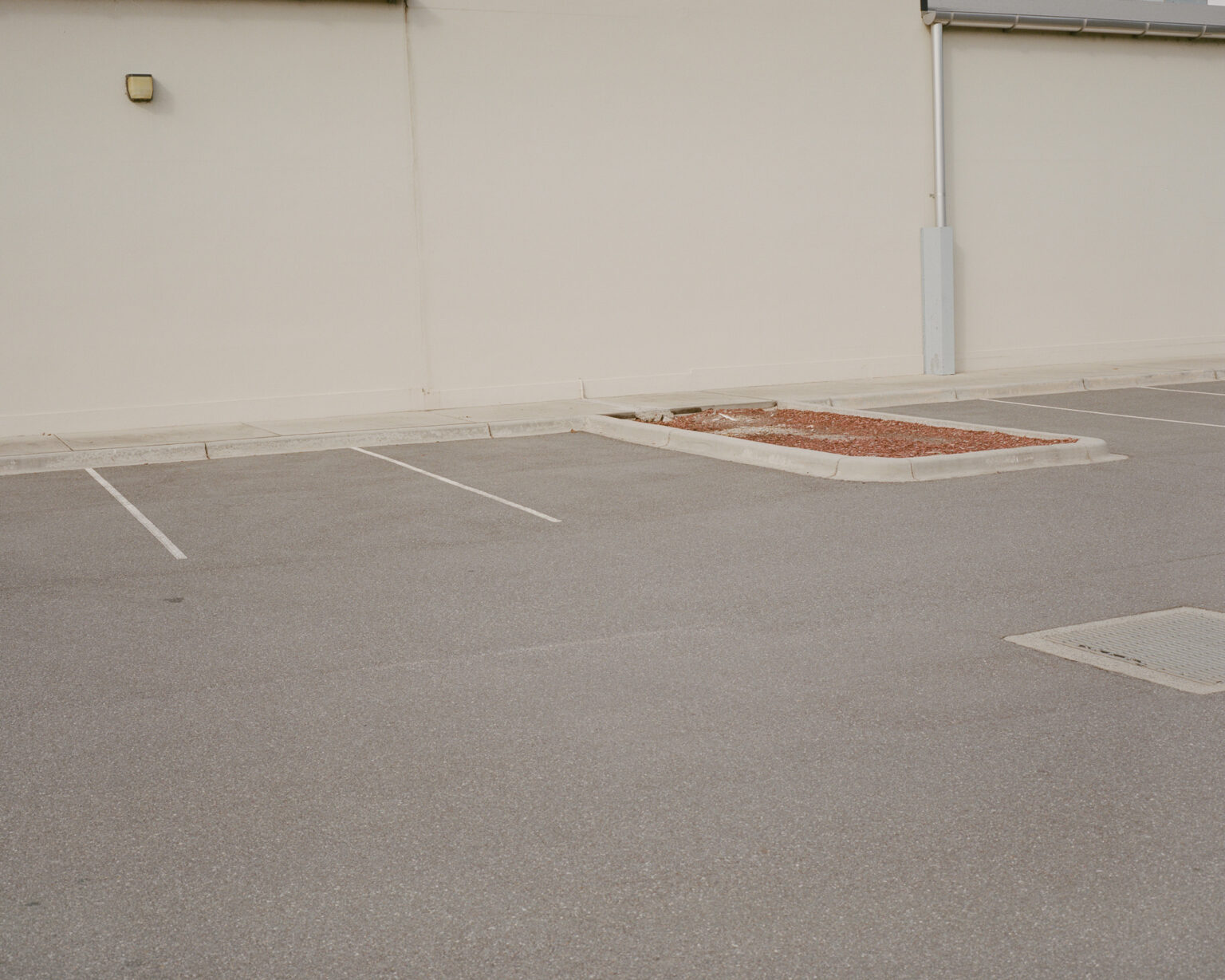
Image: A singular landscape: a carpark in Fyshwick, Canberra. From Molonglo's Canberra Study.
Can hedgehogs be outfoxed?
In the context of pluralism with its multiple inputs and outputs, it is intriguing to learn that one of the few ways researchers have found to circumvent our habitual cognitive bias is when we are listening or reading in a language that is not our mother tongue. The more foreign our linguistic relationship to the information, the more space we have to make systematic decisions that interrupt the automaton of our cognitive biases and hyperbolic discounting. (24)
In a similar seam even the grammatical construction of our thoughts and words makes a difference to how we instinctively choose future-oriented decisions. (25) Languages with grammatical biases towards weak future tenses, for example German, Finnish or Mandarin, have greater focus on the present tense. (Compare the soft future tense of the German phrase, ‘Morgen regnet es’ [It rains tomorrow] with the emphatic tense of its English counterpart, ‘It will rain tomorrow’.) It is fascinating that speakers with a weak future tense are measurably more responsible in taking behavioural decisions that positively affect their future, such as saving money or not smoking. (26)
To pause hyperbolic discounting it is clear that people must process information anew and have enough space for imagination to triumph over habit. By extension, if we consider using a creative vocabulary such as making, drawing or storytelling to communicate (remembering that for many these are like foreign languages) could this pause people’s usual expectations? Could talking with different visual ‘languages’ create helpful interruptions so we can think about and shape spaces differently?
The Modern Education and Training Institute (METI) School project in Rudrapur led by German architect Anna Heringer is an interesting case to convey this point. Rudrapur is sited in a poor rural area of Bangladesh that has suffered increasing population loss due to urban migration. The project is a two-storey training venue for 168 children and young people. It follows a relatively simple rectangular form composed of a heavy earthen base and lighter upper structure of layered bamboo. Primary building materials of earth and bamboo are locally available and inexpensive, and the project’s involvement of local makers using local materials was critical to its immediate and ongoing success. Heringer had studied craft and construction processes in Rudrapur for her diploma thesis. Having observed the advantages and limitations of local craftspeople’s skills, she was later asked by the NGO Dipshika to lead the METI project, together with Eike Roswag and a team of Bangladeshi and German craftspeople.
Heringer and her team drew on existing knowledge at Rudrapur, first working alongside local makers to experiment with new ways to construct with earth. Rather than defaulting to a typically Rudrapur or typically western model, these combined efforts created new techniques for bricks that were much stronger and more durable than those made traditionally. This process of making together was a chance to interrupt hyperbolic discounting. By physically discovering the value of the new technique and improving on conventional building methods, the project forged the opportunity to find a new approach. Once agreed and established, skilled craftspeople mentored twenty-five Rudrapur makers, teaching them how to make and construct the enhanced earthen bricks. The apprenticeship enabled the school to be built inexpensively. More importantly, the project created an enduring legacy. It empowered locals to continue to build their own projects, which are longer lasting, while also teaching their newfound skills to others in the community and neighbouring regions. In turn this has given the makers new sources of income from projects available locally as well as a sense of dignity.
If we pause to reflect on the qualities of a fox discussed earlier, we see fox-like traits illustrated through this project. Heringer’s was committed to identifying a locally specific solution and to using architecture as a tool to improve lives; she also remained open to pursuing diverse approaches to achieve this. The building experiments gave results that were not immediately predictable yet created a technique that has given its community a long-standing advantage. In sum, this contrasts with a hedgehog-like approach, which would likely have followed a linear pattern, resolute and biased towards a single correct method, yet overlooking the ability to collaboratively discover a new solution.
At a larger scale, the power of illustrating through physically testing out ideas and using this method to pause people’s cognitive bias is seen in a technique used by Envision Utah. Part of this project involved setting out a large-scale city map and asking many different residents to physically build their ideal city with small-scale wooden blocks. As participants tried out different options, they quickly realised that continuing the low-rise sprawl familiar to them would continue eating into the surrounding land and reducing natural resources; increasing built density had the opposite effect. By realising this physically and halting their usual bias, the project’s organisers helped to create informed voters who then understood and supported greater density in the city and investment in its public transport networks.
In Australia, can community engagement access ideas relevant to local Indigenous communities and interrupt their usual under-representation within western power structures? Can we imagine an expansive philosophy where land bears the history of ancestor relationships, for example, or considers the role of ‘The Dreamtime’ that is so far unusual in contemporary Australian development? (27) Often we see Indigenous engagement as a glib reference, perhaps resulting in a pastiche of Indigenous motifs added to a project or interpreted through an abstracted semiotic code. Instead, could making spaces that engage Indigenous Australians help to nurture and revive Aboriginal peoples as well as our environment? In particular, how can this process occur in urban settings? In cities there is an identified absence of meaningful opportunities for Indigenous communities to influence or understand Australian governance and develop effective engagement.
As urban planner, author and Ballardong Noongar descendent Timmah Ball notes, in spaces where the western system is forgotten about for a while, we allow for other ways of thinking about and creating space. This approach parallels the allegory of the fox, allowing for a more diverse, broad approach. Ball believes that for new narratives and new stories to surface, the process of collaboration, consultation and participation needs to be the starting point. Then, the built environment can become a conduit to realise a community’s aspirations and voice – revealing Indigenous peoples’ layered history and deep knowledge of the land. (28)
Sarah Lynn Rees, an architect and Plangermaireener descendent points out a significant difference between Indigenous and non-Indigenous perspectives. Aboriginal groups hold an attitude of custodianship for the land – this contrasts with the western model of land ownership. Because of the fundamental and entrenched cleft between these points of view she believes it may not be possible to gain irenic understanding between the two. A starting point for better relations might begin with conversations that seek to engage with Indigenous wisdom. Simultaneously, a wider social shift is required that acknowledges the Indigenous knowledge that has already been borrowed, stolen, taken, used for commercial gain or blindly received. She observes that frequently, white people are hyper-aware of political correctness and this makes them tongue-tied, silenced by their fear of asking or saying the wrong thing. A more productive way to progress Indigenous engagement and potentially enable positive collaborations could start with honest conversations. It is better to ask and be open about ‘not knowing’. Owning up to naivety about unknown boundaries and information that can or cannot be shared enables us to talk with each other simply as people. (29)
Jefa Greenaway, the first Indigenous architect registered in Victoria and the director of Indigenous Architecture and Design Victoria (IADV) talks about the opportunity to approach design, architecture and the creation of cities in a holistic way by incorporating Aboriginal knowledge. He points out that Aboriginal people were Australia’s first ecologists, with advanced agricultural practices that groomed the landscape and changed with it over time, making it possible to inhabit Australia for millennia. The variety of Aboriginal groups and their complex, evolving understanding of how to live holistically seems especially relevant now. In an urbanising world, the consideration of how cities can respond to their conditions – especially regarding air quality, land use, resistance to changing climates and changing regulations – is increasingly heightened. (30)
Arguably, educating people and gaining a collective contribution to a project seems of an importance that is directly proportionate to its scale. As with the premise of METI School, Greenaway sees education as a pillar that can interrupt customary power imbalances, which he believes preclude opportunities to find harmonious, inclusive solutions that benefit everyone. Increasing the number of Indigenous practitioners in the field will mean creating more structures and urban spaces that will better reflect embedded Aboriginal cultures and stories. This also offers an opportunity to interrupt our habitual westernised approach towards place-making – giving a new vocabulary, so to speak, that can interrupt our mother tongue’s cognitive bias.
As well as creating places that are diverse to live in, inclusive of varied histories and richly alive, creating equality in neighbourhoods, districts and cities impacts individual developments as much as society and neighbourhoods as a whole. Just as a body of people and their determination over time can affect positive change, the spheres of influence our built environment exhibits are profound: one good street or neighbourhood has triple the positive impact on all surrounding streets neighbourhoods that are considered ‘less good’ than itself. The reverse is also true. From Darwin’s observations, we know that internally altruistic groups will always outperform non-altruistic groups. With this in mind, there is even more to encourage the pursuit of broadly altruistic developments for the common good: providing a range of housing options for example within live-work-play developments that encourage variation and liveliness of use.
Whilst a logical consideration, it seems almost impossible for a developer to thwart predominant market forces in the current capitalist model within which developments are built. The profitability that the capitalist model prioritises ripples down to the cost of properties and leases, as well as the small-scale effect on individuals. It highlights the need to seek out new development models in which non-consumptive spaces to sit, meet, chat or simply reflect are valued as much as those where transactions or consumption happens. Finding the balance between the inevitable need for financial profits and the need for spaces free from commercial transaction (that don’t make money but do cost money by way of maintenance) appears to be a complex yet necessary aspiration.
As an alternative to the pressure of capitalist-led developments, it is useful to consider the established model of co-operative housing in Switzerland. This model is especially strong in Zurich where around a quarter of the city’s housing is not-for-profit, funded by private housing co-operatives, the City, or charitable foundations. Effectively, this co-operative model is the result of a deliberate, long-standing housing policy in Zurich, where subsidies exist in the form of city land grants or financial assistance. As and when residents wish to leave, their property is sold at a price in line with inflation, rather than the market value. (31) This encourages fairer and more accessible opportunities for residents to be housed and engage with the co-operative development’s associated amenities, such as shared public spaces, laundromats or grocery stores.
The city’s policy holds no matter the size of the development – from small groups of individuals to the more usual larger cooperatives composed of thousands of shareholders that are run as businesses. In exchange for financial assistance, the co-operatives must comply with commitments that include: proportional provision of low-cost rental housing; at least one percent of the development’s gross floor area for public use – such as shops, cinemas or parks; and undertaking architectural competitions to determine the design and choice of architect. (32) Recent examples include Müller Sigrist’s Kalkbreite housing development and the flagship Mehr Als Wohnen (More than Housing) scheme that illustrate these criteria at different scales. These precedents are necessarily cooperative and multivalent; they echo fox-like traits.
Authors of a recent essay on Zurich’s Housing Cooperatives point out the obvious practical challenges that a country or city newly considering this model might face. These may include the lack of precedent, prevailing and historic attitudes to collective housing, the culture of individual house ownership, or the role of the state in housing provision. However, they also point out the argument for testing the Swiss model elsewhere by leasing some public sector land so that private/public bodies can begin to develop co-operative models that benefit public civic life. (33)
We know that large groups evolve much more slowly than small groups ergo it is easier to make an impact at the scale of a house, street or neighbourhood than that of a country or city. To be small is to be nimble – to be flexible, spry, lively, agile, moving with ease – characteristics that also echo the fox. (34) In real estate, it means small private companies have the huge advantage to work relatively independently and at a discrete scale, experimenting with new ideas and approaches such as pluralism that traditionalists would likely be sceptical of.
In order to dismantle the current conventions about who and how people can access space and in order to truly value pluralism, small fox-like experiments are required to disrupt the status quo. If we think about built spaces being a will to form as well as the will to inform we recognise that creating spaces for people carries a collective desire to say something. Such experiments have the potential to set a precedent for what a development might do and how it can be done.
24
Elisabeth Peal and Wallace Lambert were the first to test children completely fluent in two languages with neither a “native” language because both were grasped so perfectly. Their study found that balanced bilinguals perform significantly better in tasks that require flexibility (they constantly shift between the two known languages depending on the situation, which requires constant juggling), are more aware of the arbitrary nature of language and also that balanced bilinguals choose word associations based on logical rather than phonetic preferences. Available from: link.
25
M. Keith Chen. The Effect of Language on Economic Behavior: Evidence from Savings Rates, Health Behaviors, and Retirement Assets. Yale University, School of Management and Cowles Foundation. Available from: link.
26
Derek Thompson. ‘Can Your Language Influence Your Spending, Eating, and Smoking Habits?’ The Atlantic. 10 September 2013. Available from: link.
27
Shaneen Fantin, ‘Aboriginal identities in architecture’ ArchitectureAU. 01 September 2003. Available from: link.
28
Timmah Ball. ‘Future Cities Aboriginal Knowledge’, MPavilion, MTalks. 4 February 2016.
29
Conversation with Sarah-Lynn Rees. Melbourne 11 January 2018
30
Jefa Greenaway. ‘Future Cities Aboriginal Knowledge’, MPavilion, MTalks. 4 February 2016.
31
The Swiss public policy contrasts with, for example, the prescriptive governance for ‘intrusive’ housing policies in Singapore, where the Ethnic Integration Policy introduced in 1989 forces quotas for religious and ethnic integration to be met in housing estates, which are occupied by 85% of Singaporeans. The intention is that it helps “prevent the formation of racial enclaves and promote ethnic integration,” according to the government’s website. Singapore’s deputy prime minister Tharman Shanmugaratnam spoke at the St Gallen Symposium in 2015 stating, “The lessons coming out of all of our societies [e.g. the rise of terrorism] show that neighborhoods matter… it matters tremendously in the daily influences that shape your life and the traps you fall into.” The reality in Singapore seems to differ: there is evidence that the ratios create resentment, uneven costs in apartment sales for religious/ethnic groups to meet quotas, and provide increasing tension between, for example, Chinese and Indians.
32
The importance of the competition model for young architects is critical as it propagates the continued experimentation of housing conventions, which is also underpinned by discourse in local architecture schools, such as ETH, where practical, methodical and experimental approaches to housing models are taught.
33
Emma Letizia Jones, Philip Shelley ‘How housing co-operatives built a city’ Architectural Review, 4 October, 2016
34
Berlin, Ibid.