An essay on practical strategies that explore disability as a creative generator by Jos Boys
Exploring Ways to Rethink Access and Inclusion
In 2008, I had the good fortune to meet Zoe Partington, a partially sighted artist who is deeply involved in access and inclusion guidance, and in disability activism more generally. Like her, but from the perspective of a non-disabled woman trained in architecture, I was frustrated by how simplistic the discourses around disability seemed to be across the built environment disciplines. Through our discussions, Zoe and I felt that a whole new way to engage with disability and the built environment was urgently needed, leading to the creation of an informal collective – now called The DisOrdinary Architecture Project. The platform’s aim is to promote activity that develops and captures models of new practice for the built environment, led by the creativity and experiences of disabled and deaf artists. Without the many collaborative activities this has generated – with disabled artists and interested architects, educators, students and related professionals internationally – this essay could not have been written. What follows first outlines the importance of recognising disabled people’s creative expertise in negotiating the built environment and the vital importance of taking notice of these diverse perspectives and experiences. It then offers three foundational strategies for doing design and disability differently, each with real-world examples of practices and processes that aim to positively disrupt the way design is currently understood and delivered.
Valuing Disabled Creativity
As the first essay, “Shifting the Ground” has suggested, properly listening to – and creatively engaging with – the perspectives and experiences of diverse disabled people is vital. “Nothing about us without us” is a term that was coined by disability activists in the 1990s. It refers to the need for any policy affecting disabled people to include input and representation from those who have disabilities (Charlton 2000). Whilst there are many built environment practices that use participatory methods and co-design, the key here is to be sure that there is an equality of engagement – what disabled designer and activist Liz Jackson has called “mutuality” (Jackson 2009).
Everybody needs to be at the same level. In order for that to happen, everybody needs to have a place at the table, an equal place at the table. They need to be able to share in the benefits. (Jackson 2009)
We may even need to redesign the table! This is crucial, as disabled people are so often denied agency and their voices unheard – or misheard. This is about being seen, listened to, and having real influence and impact on the shape of the built environment. In architecture and the built environment, disabled people are too often asked to volunteer their views (unpaid), to stand in – as an individual – for a whole disability category, or to voice opinions from an untrained or non-mentored position. Buildings aimed specifically for people with disabilities tend to be treated on a “special” case-by-case basis, separate to mainstream projects and not likely to inform them (Boys 2014). This reliance on one-off views from individual disabled clients or users means that the discipline never builds up a growing, complex and rich knowledge base of disability-led data about diverse access requirements – ones that can inform creative design-making from the start. Buildings and spaces for people with disabilities tend not to be part of the architectural canon, just as buildings that are part of the canon often have accessibility elements of disability-inflected interpretations unconsidered (Gissen 2008, Fitzsimon 2017). Yet examples such as the San Francisco Lighthouse for the Blind and Visually Impaired (2016), demonstrate how valuing sound, light, smell and materiality as creative generators can take design beyond the assumed functional and navigational requirements of its users. Designed by Mark Cavagnero Associates with Chris Downey and Arup Americas, the scheme exemplifies the positive effects of starting from difference to centre material and sonic beauty. In addition, hearing the client CEO Bryan Bashin and architect consultant Chris Downey discuss their experiences of blindness as something that opens up lives – and for Downey as something that makes him a better architect – illustrates the importance of paying attention to creative non-normative voices and experiences (Arup Americas 2016, Downey 2013).
Disabled people also have a long tradition of being directly creative in adapting built environments to their needs, from wheelchair users literally creating their own kerb cuts using hammers and concrete mixes in the 1970s, to the development and sharing of assistive devices in response to the polio epidemic (Williamson 2019), to the inventive use of refrigerator boxes as escape pods by autistic groups (Sinclair 2010). These are often called lifehacks and indicate both where conventional design is letting disabled people down, and examples of how starting from difference can produce innovative and exciting design alternatives. The slope: intercept project (2013–), created by Sara Hendren from Olin College near Boston, USA, took the idea of a simple modular ramp that can be placed in multiple situations – most immediately giving a lift across kerbs and single-step entrances (Fig. 1). This fits into the gap in US building code that exempts small businesses such as shops from making “reasonable adjustments” to the (very common) single-step entrance. People then came together in collaborative workshops (in Cambridge Massachusetts, Toronto and Seoul to date) to find all the places such ramps could easily and beautifully improve many people’s mobility access.
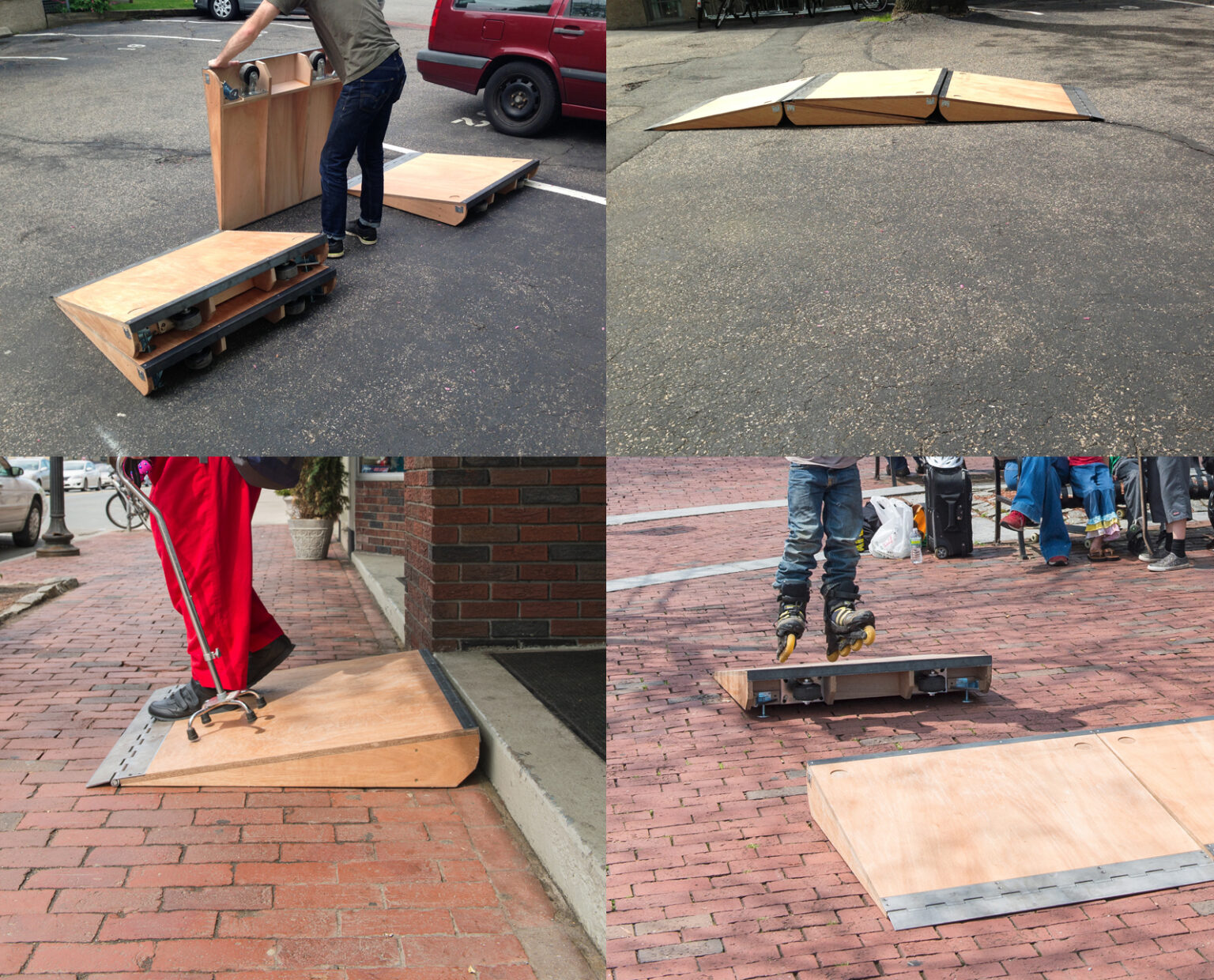
Fig 1. Installation views of Sara Hendren’s slope: intercept project, 2013–. Photo by Justin Knight.
Disabled people are, of course, also present as built environment professionals. Throughout the life of The DisOrdinary Architecture Project we have met many disabled architectural students and practitioners. However there remains considerable underrepresentation – workplaces continue to be inaccessible, and disabled people are still unlikely to disclose impairments to their colleagues or employers because of its proven adverse effects on their life chances. In response to this ongoing underrepresentation, DisOrdinary Architecture has developed five aims for engaging with disabled creatives, in support of the “nothing about us without us” principle. These are to:
- Bring more disabled people into built environment practice and education
- Ensure disabled colleagues (from both within and beyond an organisation) are treated as creative equals, with a rich variety of art practices and perspectives to offer
- Enable creative disabled people to increase their professional capacities and influence
- Develop settings where built environment professionals, educators and students can engage with a wide range of creative people, rather than a singular “representative” of a disability category
- Enable shared development and amplification of disability-led ideas and activities
One project in support of these aims is called Architecture Beyond Sight (ABS), a foundation-level one-week residential intensive study program that can enable blind and partially-sighted people to study architecture. It was originally commissioned in 2018 by the Dean of The Bartlett Faculty of the Built Environment UCL. Program development and implementation has been disability-led throughout, starting with a one-year development process, and then with all lead tutors on the course, who are themselves blind and partially-sighted architects, makers and artists. Like conventional foundation courses, studies are centred on conceptual thinking, design making, spatial and atmospheric mapping, and interpretation and design communication. But tutors and students also co-develop ways of designing beyond the visual, including audio description, large-scale sketching, and tactile and performative communications. This, in turn, suggests methods that all architectural students and practitioners could use to design differently.
Another example of learning from creative disabled perspectives in making accessible forms of design communication and representation a generative part of project development, rather than an occasional add-on, is the proposal for the Nyth Youth Theatre near Bangor in Wales by architects Manalo and White. The proposal was explained through audio description rather than conventional orthographic drawings, as the architects write in their submission: “While is primarily prepared for people with viewing difficulties, it also invites opportunity for a fully sighted person to see things differently and enhance their viewing experience. […]”. They also note that the process allowed them “to see and think differently. Numerous design details emerged from the process of writing the script with [the audio describer] such as reverberation time, tactility of stonework, smell of wood, velocity of airflow […]. Our ambition for Nyth is to offer valid choices to all users with a joy and clarity in finding their way around, assured by sense of security and filled with excitement of encounters.”
Foundational Technique One: Paying Detailed Attention to Everyday Encounters
What then, are some foundational ways for designing with difference? Here, I offer three, based on learnings from DisOrdinary Architecture activities. The first is to start from diverse lived experiences, from the intimacy of everyday encounters with things, spaces and others. Architecture is still too often designed from “big” concepts, where the ordinary detailed interactions of diverse lives have to squeeze into the resulting forms. Very early in the development of DisOrdinary, I remember disabled artists, working as studio design tutors with me, asking why students seemed to struggle so much with starting from the multiple experiences of different bodies rather than a grand visual or conceptual gesture. In my own experience, I have found that conventional design and orthographic methods can act to remove architectural students from the everyday world into abstraction, so that for example, they will ask what the width of a door is or look it up in a design manual rather than refer to their own bodies (or to actual doors). As discussed in “Shifting the Ground”, people who “fit” smoothly do not need to pay attention to their built surroundings, so even this encouragement to start from the bodymind can be generative. Fitting smoothly means not noticing the effects of gravity on your body’s balance as you negotiate steps in poor light, or uneven ground. It means blocking out when spaces are too noisy or hot or crowded. It means taking particular social rules and material cues about an environment for granted, as if these are obvious to everyone. It means never having moments of being overwhelmed by uncomfortable sensory experiences. Yet all of these misfitting moments can be powerful creative generators for design.
As well as widening our awareness of diverse embodied and sensory engagements with the built world – to include not just the visual but also all our senses and the effects of our bodies in motion – it is vital to notice how space is experienced not just differently but differentially. In her seminal article, “Lying Down Anyhow: Disability and the Rebel Body” (2013) disabled artist Liz Crow explores how the act of lying down in public (an essential access requirement for her as someone with chronic pain) becomes a story of external constraints, as societal assumptions about what is “proper” behaviour are enacted, and she is endlessly assumed homeless or drunk, and moved on. Similarly, Sophie Handler has worked with older women in East London to map how they must adapt street furniture such as bollards and walls for resting, because public space is not designed to meet this common need; seeing these engagements as creative lifehacks that suggest interesting and potentially provocative design interventions (Handler 2014).
Foundational Technique Two: Start from the Misfits
Leading on from this, the second foundational technique is starting from difference, not from average or normal or unexamined “users” but from the misfits, outliers, and what are often called unruly bodies (Mintz 2007, Gay 2018). This is to open up to the multiplicity of our ways of being in the world beyond “normal” fit as a creative development and design process. My first real, visceral experience of this – as someone non-disabled and architect-trained – was at a disability arts event held in 2007 at Tate Modern, in London. Here, the space of a flat-floor lecture room was collectively negotiated, as diverse occupants settled in, taking time to make it a better fit for diverse requirements. This included a variety of ways of sitting and lying; a reorganisation of chairs into a half circle for ease of deaf signing; different forms of “translation” of the talks into text and sign, and audience interruptions when a point was not made clear, or used jargon. For me, experiencing this remaking of the spaces and rules of the conventional lecture room was transforming. Not only was I (probably for the first time in my life) in a space with many different disabled people, but I witnessed how the space itself changed – becoming an enactment of a shared inclusivity and collective care. The room became not just an entity, but a process, where time was taken without guilt to adapt to multiple forms of engagement and comfort. I saw that valuing the rich bio- and neuro-diversity of our different ways of being in the world can make a beautiful and useful space, and that starting from disability and difference offers fantastic opportunities for designers.
The Ramp House in Edinburgh Scotland, by Chambers McMillan Architects (2013) also takes the non-normative as a starting point to create an accessible self-build home and studio for the architects’ own family. Greta, one of their daughters, is a wheelchair user, and the intention was for “the whole house to enable her to lead a barrier-free included life.” (Lloyd Thomas 2017). The design process was also participatory, including both children by using cardboard models to share what the spaces could be like. Creating a ramp to access all levels, off which all rooms lead, provides an equality of space to everyone, and means that the experience of the house changes as it unfolds. The ramp becomes more than an access route; it is integral to spatial atmosphere. In addition, it gives Greta both independence and connectivity – if she is in the living room, there are six different spaces that other family members may be in, which are still viewable and audible. For the family, it is also vital that support workers, carers, friends and visitors can use and enjoy the space. The Ramp House aims to alter perceptions of what a disabled person can do, replacing limitations and practicalities with possibilities and dreams.
Foundational Technique Three: Enabling Multiple Ways of Occupying Space
This leads to the third foundational technique – what can be called “multimodality”, an idea originally related to thinking about communication and representation as a social process. If accessibility guidance tends to give singular technical solutions, taking a “one-size-fits-all” approach, then the emergent, always partial and questioning framework outlined here suggests that inclusive spaces and services need to be layered and generous, with built-in redundancy and flexibility, in order to enable multiple forms of occupation. The design process becomes centred on the overlay of various preferences and requirements. It seeks out places where different needs align, but also offers various choices for diverse bodyminds where requirements differ or are even contradictory. This is an approach that does not stop when a building or space is completed but incorporates the whole building lifespan: both in terms of maintenance and repair, and in the provision of services and programs.
Over the years, I have seen wonderful access alignments. For example, when as part of an early DisOrdinary Architecture project, a deaf artist and an autistic artist worked together, imagining a party where similar spaces could enable signing as well as “escape” space, through the orchestration of light and volume. Or in reading about DeafSpace developments at Gallaudet University where wide corridors and ramps vital for wheelchair users also enable deaf people to converse easily in sign side-by-side (Byrd 2007). And I have been involved in enabling conflicting access needs to be met, for example where a visually impaired person with a severe condition that makes them allergic to dogs needed to work with a blind person who uses a guide dog. (The solution – enough room and support workers to look after the dog elsewhere sometimes).
Seeing access as a multiplicity of requirements needs to be underpinned by what Yergeau et al (2013) call an ethics of accessibility. This requires paying responsible and respectful attention to the differences people bring to a situation “that allow[s] the broadest possible range of people to make meaning in ways that work best for them.” Yergeau also explores how multimodality needs to be more than just the additive combination of different elements (particularly when this retains a retrofitting mentality). We need always to be exploring how those access layers can be commensurable, without a differential quality of experience, whether these are the same or different. Such an approach does demand a spatial and resource generosity – not just one accessible toilet but several with different facilities, corridors spacious enough for comfortable passing, doors wide enough to get through easily in a mobility scooter, or with children, or when carrying packages. Committing to multimodality is a deliberate re-distribution of resources towards those who currently face barriers across objects, spaces, encounters and services.
Changing Commissioning, Delivery and Maintaining Practices
The central contention of this essay is that in order to make accessible and inclusive spaces, developers, commissioners, clients, designers and managers need to first change their own ways of working. As Aimi Hamriae writes:
When disability activists enter [..] the profession of architecture, they show [..] that architects do not just design buildings, they also design curricula, licensing requirements, research, and fields of discourse that give meaning to their work. (Allan 2021)
This means everything from rethinking employment and Continual Professional Development (CPD) practices, to building in ways of engaging with the creativity of disabled people across all aspects of the business, to exploring alternative design methods and forms of representation. A good example here is BLOXAS, a small architectural practice in Melbourne led by Anthony Clarke. This is a design- and research-focused practice, specialising in meeting atypical project briefs of all scales, which aims to use non-normative ways of developing, representing and reflecting on building projects. Scheme descriptions go beyond conventional approaches, instead incorporating personal narratives from clients, related literature that can include poetry as well as research articles, and ongoing consultation and relationship-building with clients after the build process. One project, a private garden pavilion (2015), was designed not only as an escape from modern city life but also as a place of retreat for a client who suffers from a chronic sleep disorder. The project starts with understanding of the client’s specific lived experience through the intersections of research and conversation (Fig. 2).
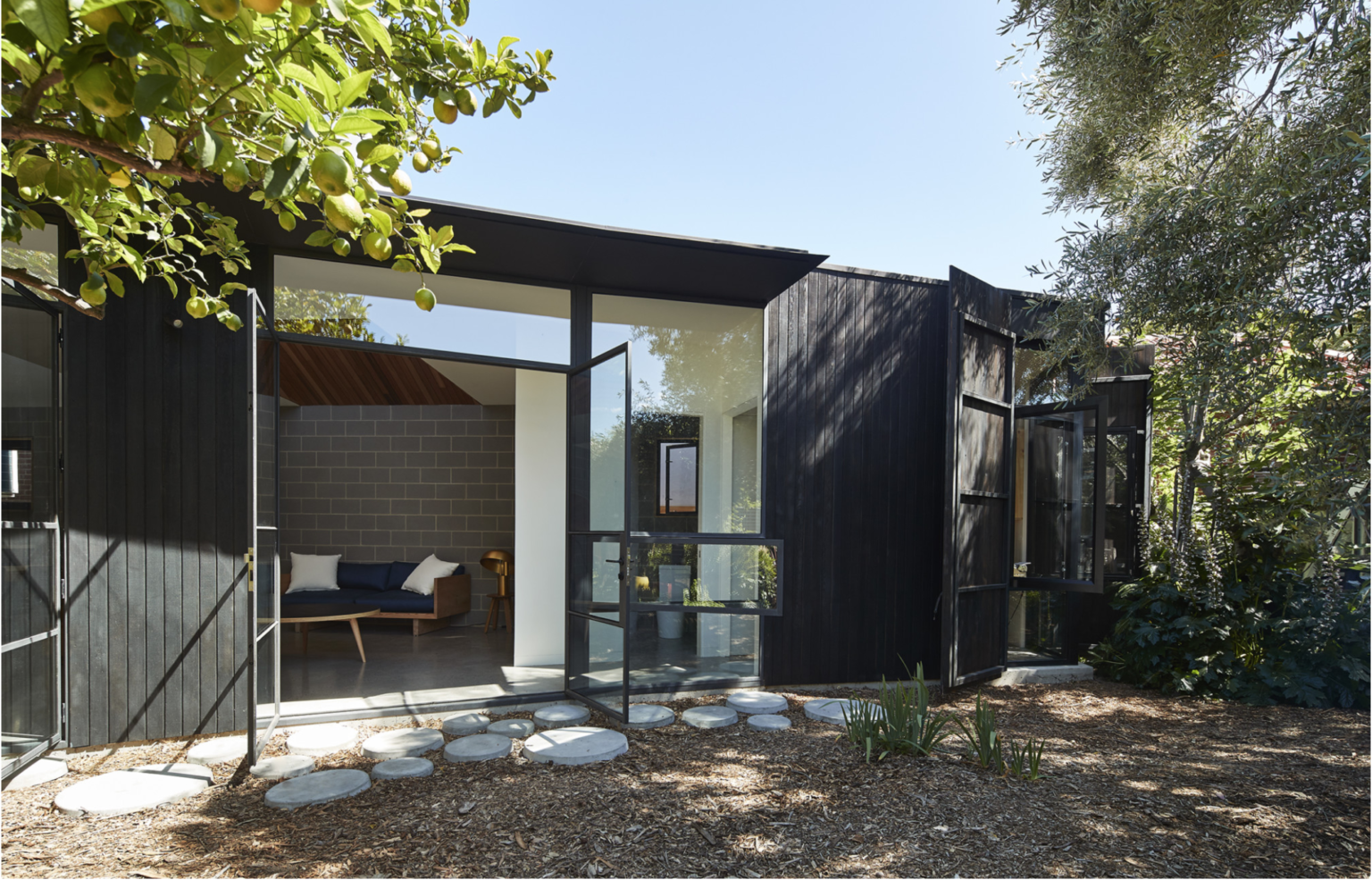
Fig 2. Exterior view of the Garden Pavillion, 2016. Designed by BLOXAS. Photo by Peter Bennetts.
Whilst an ideal is to work directly as co-partners with disabled creatives as developers, designers, clients and users, this is often not viable beyond such small-scale projects. The built environment sector also needs to actively engage with the rich and complex body of knowledge about access and inclusion already being produced by disability scholars, artists and activists, and then be part of amplifying this across the profession and with clients and other stakeholders, with the explicit aim of shifting wider attitudes and approaches. Engaging with current discussions by connecting with key disabled people working in this area through social media is a good start (and suggestions are offered in the resources section included in Designing with Difference). Looking to train and employ disabled creative people is another, not just to join the existing built environment “club” but to collaborate on changing that club. Businesses could also bring in disabled creatives and scholars for guest lecture series, residencies and paid internships. Crucially, organisations need to produce equality and inclusion strategies and implementation plans that include building long-term relationships with disabled experts; with good practice principles that are embedded in contractual relationships with other parties.
Once buildings and spaces have been constructed, they can be understood as co-evolving through ongoing processes of fitting and misfitting. Occupants, with varying degrees of agency and control can alter spaces to try out novel material arrangements that disrupt “built‐in behaviour patterns and other forced expectations” (Kullman 2019). Commissioning and managing organisations need to find ways to respond to these “lifehacks” as indicators of possible positive changes, rather than as problems. Crowd-sourcing and other methods for getting diverse feedback from occupants then becomes a way to illuminate decision-making around improving maintenance as a process of collective care and social value.
As an example of the possible ways forward, Heatherwick Studio has been developing inclusive and sustainable frameworks to fundamentally change their practice since 2019, with some support from The DisOrdinary Architecture Project. The aim is to go beyond merely adding some “doing good” principles to their existing design-oriented approach, instead purposely integrating these aspects across the whole. Thus, accessibility, for example, is taken as a lens through which to look at what the practice already commits to. This work has been underpinned by a clear strategy for development and implementation that encourages internal debate and engagement. For instance, the Studio has organised a disabled artists’ guest lecture series, as a creative and provocative means for designers to rethink their own assumptions about disability and to imagine alternative, more inclusive design concepts. Crucially, these activities are built into a longer-term process that includes:
- Drafting and reviewing a vision and strategy document, internally and with external partners
- Setting up Studio Knowledge Clusters as important platforms to push design ambitions
- Facilitating input into and advice for design teams
- Providing a forum for design panel review of projects
- Creating an ongoing educational and workshop program (including talks and workshops with disabled artists, walk-and-talk building audits and mini-brief design provocations)
- Producing accessibility checklists based on integrating design principles with regulatory requirements
- Exploring related research and development opportunities, and product design
Towards Environments for Flourishing
Designing with Difference makes a radical claim – that we urgently need to reshape the habitual and deeply sedimented ways in which disability as a concept and disabled people as a diverse group are labelled, both in our society, and within architectural and development theory and practice. We cannot go on being content with this “normal” way of operating, which doesn’t serve most disabled people well or even adequately. As professionals, we need to stop and pay attention precisely because we want to understand our actions and responsibilities; and to explicitly design more inclusively and sustainably.
Disability activism often uses ideas of thriving and flourishing to describe what makes our lives worthwhile and to highlight how disabled people have to fight for such spaces because their lives are so often seen as less valuable. I have proposed that access and inclusion as a goal is always an ongoing and imperfect practice, that it doesn’t start or stop with regulatory compliance, and that it is also creative, critical and actively committed to a better world. This is because, as Kim Kullman says “equality is a dynamic process that interacts creatively with a shifting landscape of inequality by inventing ever‐new ways of breaking its hold over the world” (Kullman 2019). Making a truly inclusive environment, then, is about developing an awareness of, and challenging, the creation of disabling spaces wherever you can.
In addition, broader implications for land and property development need to be considered, if we are to move towards rethinking who is valued and who is left out in today’s societies, and who our built spaces enable to flourish. The problem of land and buildings as commercial assets creates a pressure that can lead to the inequality of resource distribution and access – and threatens to perpetuate patterns of privilege and discrimination. This is being exacerbated by the privatisation and commercialisation of much of our built landscapes. There are big questions here about how to reframe priorities away from a laser focus on profit, towards organisational frameworks that support development and design based on resourcing spatial generosity, multimodal design and delivery centred on collective care. There is already much good work around rethinking business models in response to social inequalities and climate change – such as the triple bottom line of people, planet and profit – that relate directly to the concerns and provocations explored here. Linking these models to new ways of thinking about access and inclusion – for example by centring on what Manisha Amin, CEO of the Centre for Inclusive Design in Sydney, calls the power of “thinking from the edge” to transform organisations – all act to strengthen a more equitable and ethical approach (Leaders for Good 2021).
There is also an urgent need to build up knowledge banks of diverse perceptions of, and engagements with, built space; and of good accessible design and delivery processes and elements. This remains a huge gap in the built environment disciplines. The creative and critical knowledge is out there in disability arts, activism and scholarship, but has remained seriously under-explored in property development, architectural design or management, and therefore this knowledge is not yet informing project processes or organisational structures.
A final point about designing with difference. Built environment design and delivery has an inherent problem with difference – with the variety of even its most “normal” occupants, let alone the unforeseeable consequences of changes through time (ownership, use) as well as complex and often shifting development, construction, design, delivery and management processes. When it comes to understanding users and occupation, we have too often relied on ergonomics and averages, on norms and intuition. Yet an average or norm can only be produced by starting from a whole spectrum of people. It cannot exist without this diversity. But if normal differences are reduced to a single norm, and often then distorted with stereotypes, then the realities of our variously vulnerable and different bodyminds disappear. Figuring out ways for multi-layered and complicated ways of being in space to become more visible; to be valued in our rich and various bio- and neuro-diversity, and to deeply inform design and delivery will require many actions towards new ways of thinking and doing. I believe that even small-scale actions can gather social momentum – snowballing into larger movements and creating shifts in mindsets and in culture and society more generally. The approach outlined here is going to be both much more complex than simply relying on ready-made access solutions, but also much more interesting and creative; a vital and important means of opening up new and innovative possibilities for the built environment, for the professions that create it, and for the people who use it.
Notes on terminology
There are different ways of referring to disability. In some places, the preference is for what is called person-first language (people with disabilities), in others identity comes first, as a form of disability pride (disabled people). The latter tends to be used in the UK, and is the term mainly used in this essay. In Australia, person-first language is the preferred terminology. In addition, many Deaf people, particularly those who use sign language, see themselves as a linguistic minority with their own language and culture, and therefore do not define as disabled. The use of a capital D for Deaf recognises this differentiation.
Disabled activists have long argued for a the shift from the medical model of disability which sees impairment as a personal tragedy in need of cure; to the social model which focuses on disability as primarily constructed by societal and physical barriers. More recently activists and scholars often use what might be called a relational model (Kafer 2013). This is the framework used in this essay. It unravels how people are disabled through the complex interrelationships between different bodies, minds, objects, spaces and encounters.
Bibliography
Allan, Matthew. 2021 “Designing for Disability Justice: On the Need to Take a Variety of Human Bodies into Account.” Accessed February 10, 2021.
Arup Americas. 2016. “Design by Ear: the New Lighthouse for the Blind.” Accessed February 28, 2021,
Byrd, Todd. 2017. “Deaf Space” in Disability, Space, Architecture: A Reader. Edited by Jos Boys. Oxon: Routledge: pp. 241–246
Charlton, James. 2000. Nothing about Us Without Us: Disability Oppression and Empowerment. Berkley: University of California Press.
Crow, Liz. 2013. “Lying Down Anyhow: Disability and the Rebel Body.” In Disabling Barriers – Enabling Environments, 3rd edition, edited by Swain, J, French, S, Barnes, C & Thomas, C. London: Sage. Reprinted in Boys, Joys (ed). 2017. Disability, Space, Architecture: A Reader. Oxon: Routledge.
Downey, Chris. 2013. “Design with the Blind in Mind.” TED, Accessed February 28 2021.
Fitzsimon, Kent J. 2012. “Seeing Motion Otherwise: Architectural Design and the Differently Sensing and Mobile”, in Space and Culture vol 15, issue 3: pp. 239–257.
Gay, Roxane. 2018. Gay Mag: Unruly Bodies. Accessed March 5 2021.
Gissen, David. 2018. “Disability as Architectural Criticism – Yale/Rudolph,” in HTC Experiments. Accessed 5 March 2021. https://htcexperiments.org/2008/10/03/disability-as-architectural-criticism-yale-1996/
Hamraie, Aimi. 2017. Building Access: Universal Design and the Politics of Disability. Minneapolis: University of Minnesota Press.
Handler, Sophie. 2014. An Alternative Age Friendly Handbook. The University of Manchester Library. Accessed February 28 2021.
Kafer, Alison. 2013. Feminist, Queer, Crip. Bloomington: Indiana University Press.
“Leaders for Good: Inclusive leadership with Manisha Amin.” 2021. Accessed on March 22 2021
Lloyd Thomas, Katie. 2017. “The Ramp House: Building Inclusivity,” in Disability, Space, Architecture: A Reader, edited by Jos Boys. Oxon: Routledge. pp. 261–271.
Mintz, Susannah B. 2007. Unruly Bodies: Life Writing with Women with Disabilities. Chapel Hill: University of North Carolina Press.
Miserandino, Christine. 2003. “The Spoon Theory.” in But You Don’t Look Sick blog. Accessed March 5 2021.
Price, Margaret. Forthcoming. Crip Spacetime: A Re-orientation to Disability Studies. Durham: Duke University Press.
Sinclair, Jim. 2010. “Cultural Commentary: Being Autistic Together.” Disability Studies Quarterly Vol 30. No.1
Titchkosky, Tanya. 2008. “’To pee or not to pee?’ Ordinary Talk about Extraordinary Exclusions in a University Environment”, Canadian Journal of Sociology/Cahiers canadiens de sociologie, 33(1): pp. 37–60.
Yergeau, M. Remi et al. 2013. “Multimodality in Motion: Disability and Kairotic Spaces.” Kairos: A Journal of Rhetoric, Technology, and Pedagogy, 18 (1). Accessed: 20 February 2021.