A conversation with Pezo von Ellrichshausen on the idea of buildings as handmade objects
Published in
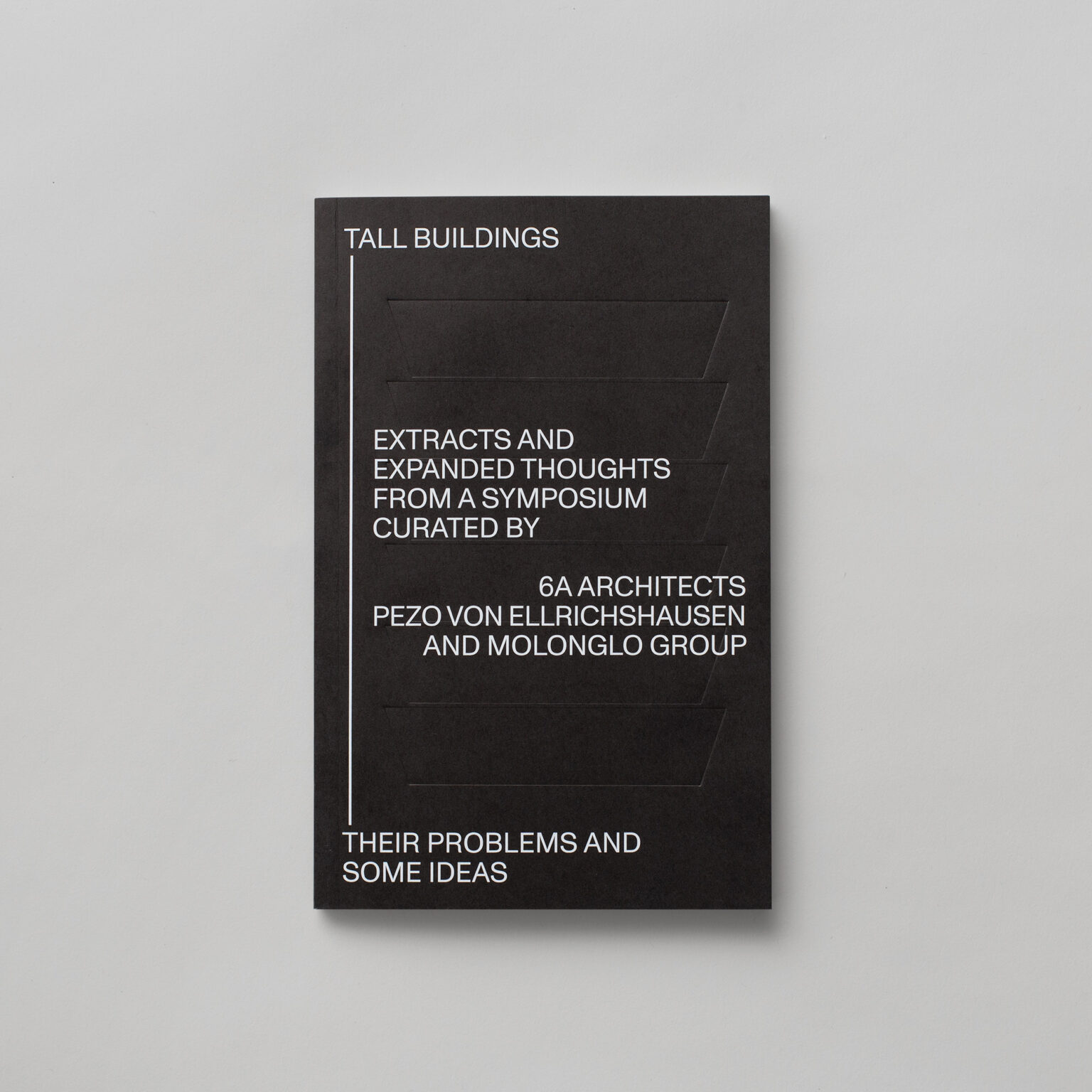
Tall Buildings: their problems and some ideas
A publication that explores the possibilities of tall buildings.
Pezo von Ellrichshausen is an art and architecture studio founded in 2002 by Mauricio Pezo and Sofia von Ellrichshausen. They live and work in the Southern Chilean city of Concepción. Here, Pezo von Ellrichshausen speak with Molonglo’s Steph Donse about our relationship with large vertical structures and the idea of buildings as handmade objects.
Stéph Donse (SD)
In a workshop you ran a little while back, you tasked us with making models of tall buildings using plastic bottles that we wrapped in paper. Then, with little plastic human figurines, you asked us to experiment with scale and the vertical relationships between the buildings and our little humans.
You called this exercise ‘Natura Morta’ (which literally translates from Italian to mean dead nature and is used to describe still life paintings of inanimate natural and manmade subjects).
The idea was to reflect on our relationship, as humans, with large vertical objects such as tall buildings; and our perceptions (and preconceptions) of these structures.
What were your thoughts about the process and the buildings that were made during the workshop?
Pezo von Ellrichshausen (PvE)
In this exercise we weren’t inventing new buildings but rather studying the depiction of tall buildings and our ideas around them through scale models. Models are an explicit simplification of reality or of an imaginary world. They can also represent an ideal reality. They are a model, an example, of that world. By quickly constructing a paper scale model you are allowed to enter into this fictional reality.
As architects, generally, we tend to try and solve architectonic problems with one single solution, all at once. This approach is somewhat humbler. The production of architecture usually involves a number of constraints that need to be considered, a subjective point of view, a personal perspective, and an intuition about how it should be. Exercises such as ‘Natura Morta’ highlight this process of problem-solving and production.
Thinking about the relationships between the handmade towers and the variously sized figurines is instrumental in starting to understand the consequences, both physical and conceptual, of each particular configuration.
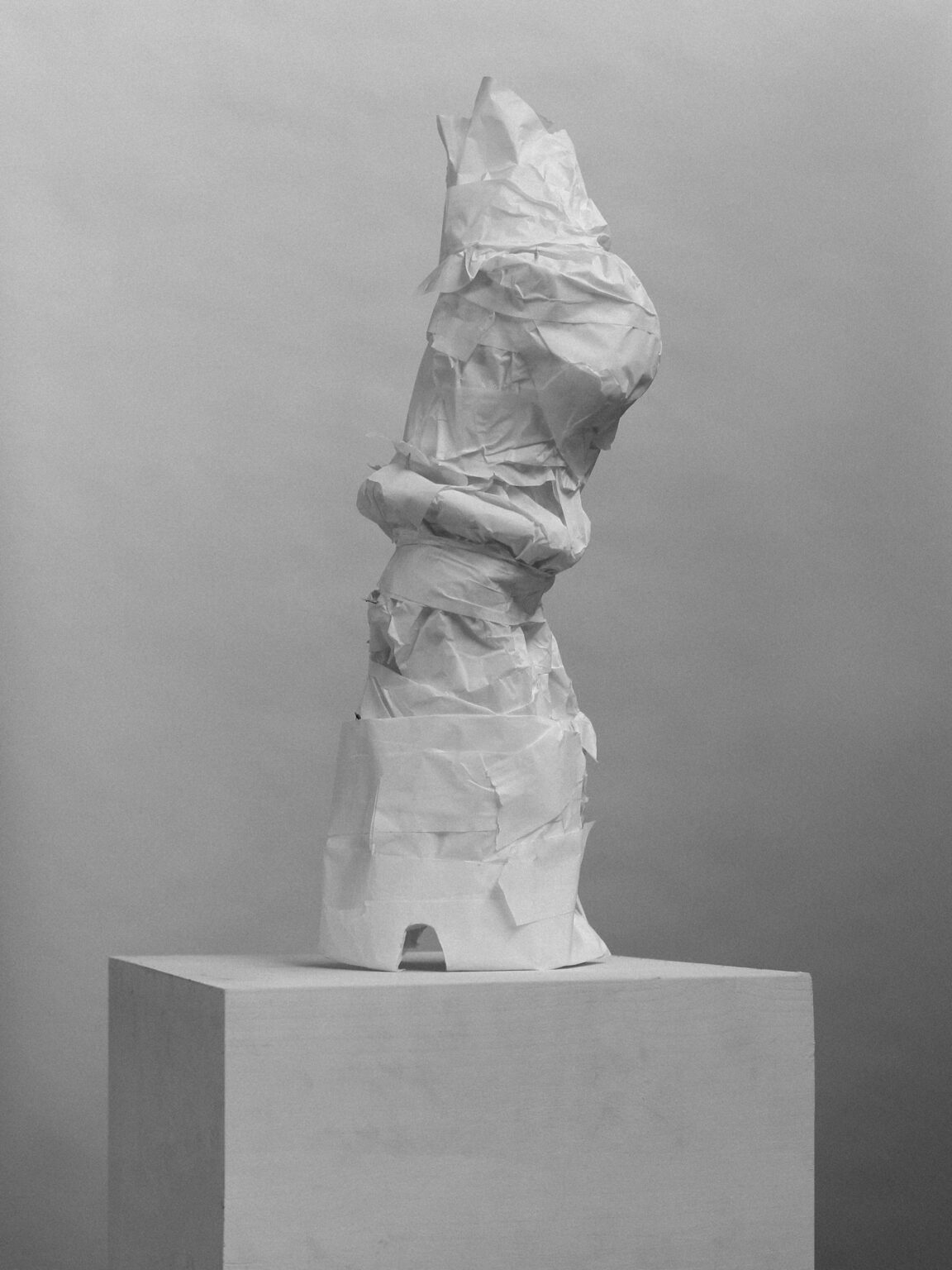
Image: A tall building made during the ‘Natura Morta’ exercise.
SD
The exercise reminds me of a short film by Eric Breitbart on German art historian and cultural theorist Aby Warburg titled Aby Warburg: Archive of Memory (2003). In it Warburg says: “Man no longer moves on four legs but walks upright. This paramount human act, the striving of the earth bound towards heaven, is a symbolic posture that gives him the nobility of the upward turned head. Contemplating the sky is the grace and the curse of humanity.”
In his film Breitbart describes Warburg’s first trip to America (which, incidentally, was around the same time as the birth of tall buildings) and his disgust at American cities. Warburg believed that the people building these cities had become unafraid of nature and disconnected from the primal and the irrational that he felt helped to express our collective cultural memory.
It’s true that, generally speaking, humans seem to have forgotten that we are part of nature and indeed believe that we can control it. What is the importance of the primitive and instinctive in architecture?
PvE
The formal expression of the models was clearly vertical. They could also be read as large sculptural objects. Those associations could be traced, almost intuitively, because we could see ourselves inside the model. We could imagine the monumentality of the piece, the almost sublime impression of being next to that huge vertical object. And of course, one could trace that feeling all the way back to our primitive relationship with large natural elements. If you are next to a large rock, or on top of it, let’s say at 50 metres above the ground, you would be totally terrified. That emotional dimension, the visceral response, is exactly the same if you are on top of a tall building. The only difference is that you expect architecture to protect you by way of building codes, safety regulations, resistance of handrails and so on. If you are on top of a terrace without a protecting glass, you wouldn’t go right up to the edge because you know you could fall. I find it fascinating to realise that our fears are the same on top of a large rock, on top of a large tree or on top of a large building. We don’t expect nature to be kind in the same way. We don’t expect nature to be logical, clean or stable. It’s interesting to consider that in the current production of architecture there is a tendency for built spaces to alienate us through that exact process of keeping us safe.
SD
How can we channel the primitive when it comes to tall buildings and the cities that these buildings influence? Could this be a way to bring nature back into the city?
PvE
What is interesting to us are these analytical reasonings around architecture and life. For many centuries now, architecture has been treated as being different from nature.
Of course, a building is a manmade object and a rock is not, unless it is hammered and polished to become a sculpture or a bowl. But a building is also a material reality that, after completion, becomes part of a natural ecosystem. The sun, the rain, the wind, the bird or the moss have the same effect on a rock as on any building.
Cities are not only founded in nature but are also constantly conditioned by natural phenomena. I prefer to understand the world as a continuum with more or less degrees of life and culture. When you look at it this way, a pond that has no life living inside it has no culture, but a city has a much more concentrated density of culture and life within it. The quality of the city is relative to the balance between natural laws and the way that life plays out by way of cultural rules. Perhaps this is a key factor to bear in mind when thinking about tall buildings.