In this essay Sara Savage asks us to rethink our relationship to tall buildings
Published in
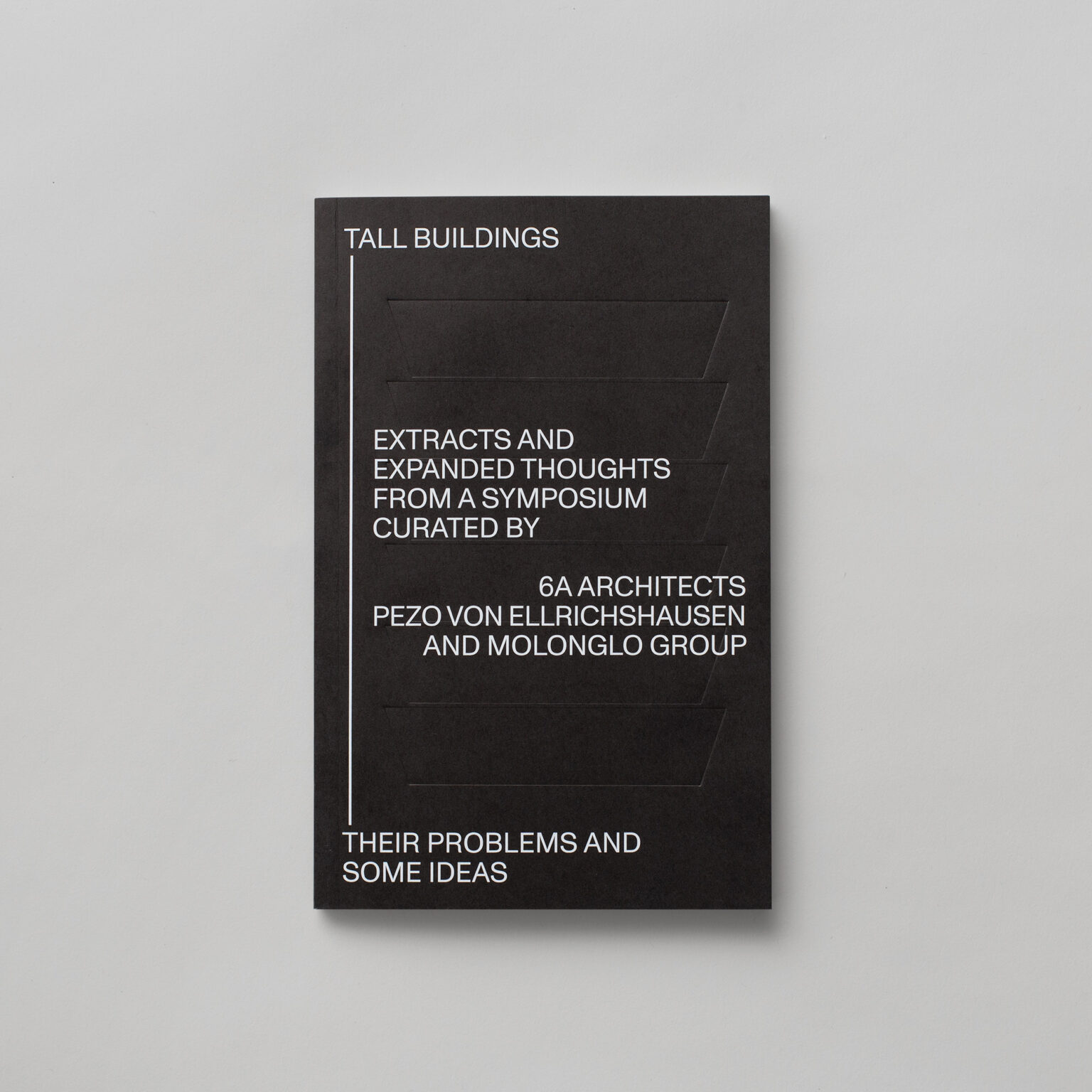
Tall Buildings: their problems and some ideas
A publication that explores the possibilities of tall buildings.
“Today’s tall building is a puzzling and paradoxical package. […] No other building type incorporates so many of the forces of the modern world, or has been so expressive of changing belief systems and so responsive to changing tastes and practices. […] The tall building probes our collective psyche as it probes the sky.” – Ada Louise Huxtable, ‘The Tall Building Artistically Reconsidered’, November 1982
Imagine the late Pritzker Prize-winning architecture critic Ada Louise Huxtable writing her essay ‘The Tall Building Artistically Reconsidered’ to a backdrop of the schmaltzy number-one hit of the time in which it was first published. What if the lyrics “love lifts us up where we belong” – as crooned in harmony by Joe Cocker and Jennifer Warnes in 1982 – were referring to the highest heights of a tall building? This is funny because it would scarcely be true: the tall building has been a site of frequent public scrutiny since its tentative inception. In Chicago 1885, during the construction of William LeBaron Jenney’s 10-storey Home Insurance Building – the first inhabitable tall building to do away with load-bearing walls in favour of a structural steel frame, and thus, many have argued, the first-ever ‘skyscraper’ (Korom 2008) – sceptics drove the Home Insurance Company to cease building so that outside experts could re-examine its integrity. The tall building, wrote Huxtable nearly a century later, “continues to plague, disconcert, and confound theorists and practitioners alike” (Huxtable 1982). Four decades down the track, the sentiment persists.
In the lead-up to the ‘Tall Buildings: their problems and some ideas’ symposium, participants were invited to submit a photograph that, in their eyes, represents an aspect of the city they love. The brief called for a photo that reflects something the beholder finds exhilarating; that makes them happy, comfortable or relaxed; or that engenders a sense of place or belonging. Much like the pool of participants the responses were diverse. On the sandstone walls of Chapter House in Flinders Lane, the symposium opened with a slideshow of the collected images: the intimate public interior of the Arts Centre Melbourne foyer; a beach at the edge of the city; criss-crossed telephone wires framing pockets of the sky; a bridge crowded with teenagers in Rijeka, Croatia; a makeshift handrail at Melbourne’s Flinders Street Station; and a home in Sydney’s Redfern, specifically at the Block, a historical site of First Nations resistance now compromised by aggressive redevelopment. Viewed as a series, a common thread among the images begins to materialise: in some way or another, civic space plays a fundamental role in almost everyone’s interpretation of a meaningful experience within their city.
Tall buildings haven’t traditionally been associated with meaningful urban experiences. In film, the tall building is commonly maligned as a site of corruption, disorder or impending doom. The “evil skyscraper” is a film trope as old as the medium itself, with films like ‘Blade Runner’ (1982) and ‘Dark City’ (1998) the stylistic successors of Fritz Lang’s ‘Metropolis’ (1927) and its gothic New Tower of Babel. In David Cronenberg’s film ‘Shivers’ (1975), the Mies van der Rohe-designed apartment block in which the entire film fittingly unfolds is a self-contained playground for its residents, unsusceptible to the politics of the outside world. There are few opening credits sequences more ominous than the pseudo-advertisement that lifts the curtain on ‘Shivers’: “Day-to-day living becomes a luxury cruise when you’ve made your home a Starliner Tower apartment,” the narrator boasts as a promotional slideshow of the 15-storey building flickers on-screen. “Explore our island paradise, secure in the knowledge that it belongs to you and your fellow passengers alone” (Cronenberg 1975). Of course, it’s mere moments until the ultra-convenient tower of excess descends into all manner of sex, gore and the chaotic brand of body-horror Cronenberg would go on to become known for.
In the same year ‘Shivers’ was released (and one year prior to the completion of London’s Barbican Estate), British author J. G. Ballard published his novel ‘High-Rise’ (1975) – another dystopian thriller set in a modernist apartment block that descends into orgiastic, murderous chaos. Ben Wheatley and Jeremy Thomas’s 2015 film adaptation does a great, if disturbing, job of bringing to life some of the more sordid moments of the book. It’s a significant and often overlooked detail that the frenzied residents in ‘High-Rise’ are predominantly middle-class: Ballard seems to position the social issues witnessed in many of London’s post-war council estates of the time not as the result of the people who inhabited them (as newspapers of the era might have had you believe), but of what Ballard calls the “unadorned geometry” (2006) of the modernist tower block itself. The tall building here – and in ‘Shivers’ – becomes a twisted diorama, embedded so deeply in the psychology of its residents that it’s practically a sentient character in its own right.
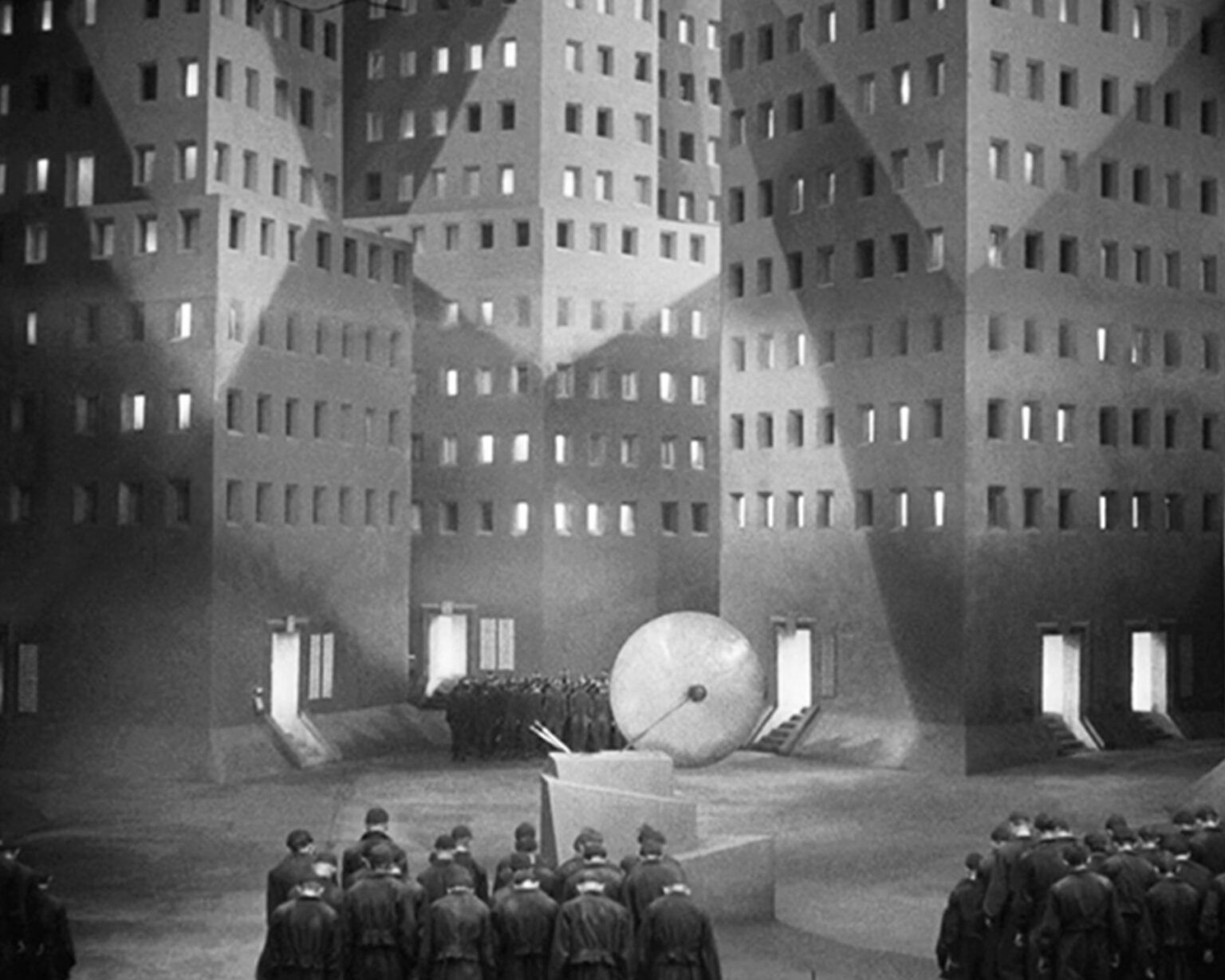
Image: Still from Metropolis, 1927.
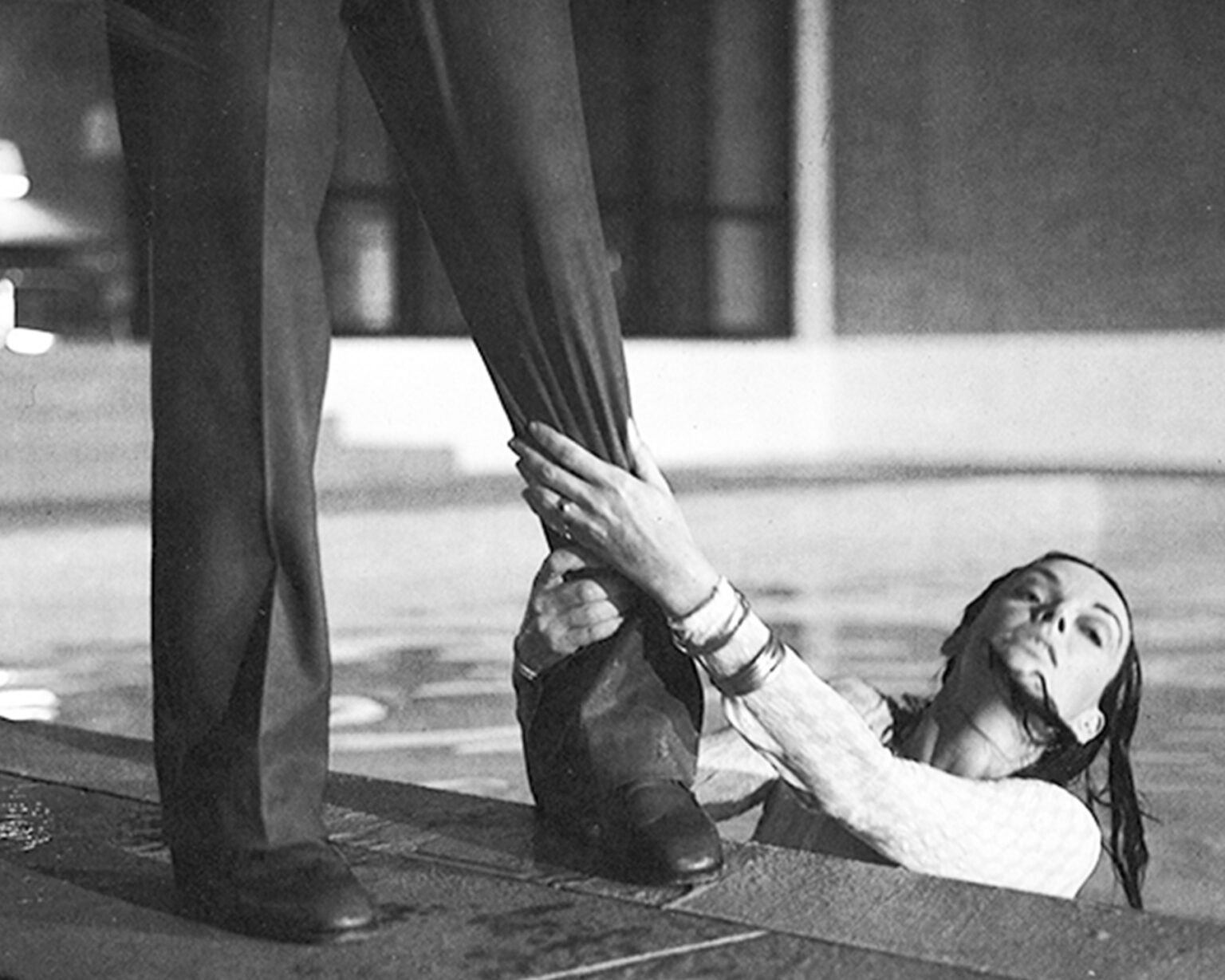
Image: Still from Shivers, 1975.
Today, tall buildings remain a source of great anxiety in pop culture and the real world alike. “Tall buildings are a challenge in every city,” says Stephanie Macdonald of London-based 6a architects, who lead the symposium alongside Sofia von Ellrichshausen of Chilean art and architecture studio Pezo von Ellrichshausen. “Some are amazing, the result of centuries of accumulated knowledge, but for many of them our points of connection get lost in efficiencies and economics.” The sheer rate at which they’re being built is staggering: in 2017 alone, the Council on Tall Buildings and Urban Habitat (CTBUH) reported that 144 tall buildings – that is, buildings of 200 metres height or more, according to the CTBUH, though the official definition of a ‘tall building’ can vary depending on context and location – were completed, bringing the global total to 1319 (CTBUH, 2018). That’s a 12% increase from 2016, a 402% increase from 2000, and a 1750% increase from 1982. Indeed, when Huxtable penned her seminal essay, there were fewer than 75 tall buildings in the entire world. Add to this a rise in vacant dwellings held for speculative gain (often invisible in flatter neighbourhoods, but palpable in a high-rise skyline at night), and we find ourselves a very real reason – sex, death and science fiction aside – to feel anxious about the highest heights of our urban landscapes.
At the ‘Tall Buildings’ symposium, Stephanie Macdonald followed the opening slideshow with a series of drawing exercises. In groups, participants were tasked with sketching quick-fire representations of the various elements that comprise our urban environments such as individual people, nature and greenery, public spaces, material surfaces, infrastructure, bodies of water, and shadows and light. These were then assembled into a series of “tall buildings” on the Chapter House floor. The perceived quality of the charcoal sketches is of little importance, with the fast-paced nature of the exercise intended to liberate participants from preconceptions of both their drawing skills and of what the program of any tall building should look like. In arranging the pieces, some questions swiftly emerged: What happens to public space as it travels upwards? How do disparate tall buildings relate to each other beyond ground level? And who are we excluding the higher up we build?
“We seem to need a certain element of street-level chaos in our lives,” J. G. Ballard once said in a 1998 BBC Radio interview, insisting that humans are inherently unable to enjoy living in high-rise buildings. The ‘High-Rise’ author’s admiration of street-level dynamism recalls American-Canadian journalist and urbanist Jane Jacobs – perhaps the most vocal critic of austere modernist planning methods during their heyday in the US, and someone who regarded streets and their sidewalks as the “most vital organs” of any city. In her influential 1961 text ‘The Death and Life of Great American Cities’, Jacobs shares her notion of a kind of “casual public trust”, or “street support”, which she believes is the direct result of healthy life on the streets: “The trust of a city street is formed over time from many, many little public sidewalk contacts… Most of it is ostensibly trivial but the sum is not trivial at all” (Jacobs, 1961). The result of these interactions, says Jacobs, can be an invaluable resource in times of both individual and community need, and is the stuff of which great cities are made. Observing the collection of ‘buildings’ laid out on the floor at the ‘Tall Buildings’ symposium, Jacobs’s name was uttered more than once. How might Jacobs – champion of medium density and mixed primary use – suggest vertical structures relate to one another, and to the communities around them? And can sidewalks in the sky ever truly be for the public, let alone with a life just as vibrant as that on the street?
More than just a Jetsons-esque fantasy, the concept of “streets in the sky” dates as far back as the story of the Hanging Gardens of Babylon (though the term itself was coined by New Brutalist figureheads Alison and Peter Smithson (Murphy, 2016). Throughout history, numerous projects have attempted to radically transform the tradition of street-level spontaneity. Perhaps most infamous is the City of London’s ‘Pedways’ scheme of the 1950s and 1960s, intended to elevate pedestrians away from increasingly congested car traffic down below. Ultimately the scheme flopped due to budget constraints, heritage restrictions and other barriers that prevented a truly functional network from ever being fully realised. The Pedways became relics – though still vital organs of the Barbican Estate and Museum of London today – while in other parts of the world, attempts at connective infrastructure between tall buildings have been considerably more successful. Hong Kong is renowned for its complex three-dimensional network of elevated walkways, while New York’s High Line famously tackled what French sociologist Jean Baudrillard calls the “competitive verticality” (Graham, 2016) of the Manhattan skyline, by transforming a disused railroad line into a 2.3-kilometre elevated “linear park” and walkway. Interestingly, High Line co-creator Robert Hammond admitted in a 2017 interview that the project – a tourist hotspot – had “failed” to serve its original community in Chelsea: “Instead of asking what the design should look like, I wish we’d asked, ‘What can we do for you?’ …Because people have bigger problems than design” (Bliss, 2017). In May 2017, the city of Seoul unveiled its answer to the High Line, the Seoullo 7017 “skygarden”: an elevated, 983-metre public linear park and adaptive reuse of a former highway overpass, designed by Dutch architecture firm MVRDV. As Stephen Graham points out in his book ‘Vertical: The City from Satellites to Bunkers’, truly public skybridge systems are scarce, with most cities instead developing “new towers through logics of competitive and privatised verticality, where each iconic structure is designed to out-do, and be separated from, its adjacent competitors.” (Graham, 2016) Even if true public space can exist at taller heights, how is this publicness communicated to passers-by down below?
Towards the end of the symposium, Sofia von Ellrichshausen lead participants in considering the potential of the tall building form to psychologically alter our relationship to the world around us. The task – in which four groups constructed urban models using a prescribed set of materials – required an engagement with the “human scale”, a term championed by Danish architect and professor Jan Gehl. It’s presumably a coincidence that the primary medium for this task – empty vessels, in the form of plastic and glass drink bottles – recalls Gehl’s favoured term for describing overly decorative tall buildings that don’t engage with their context: “perfume bottles” (Pedersen, 2016). The exercise yielded mixed results. One group fashioned a single building with a distinctive organic shape, while another played with aperture, figuring the buildings as objects seen from far away, and considering the emotions invoked as a mere spectator. As Tom Emerson of 6a architects reflected, “The task was to engage with human scale, but no one really explained what they meant by that … There’s an assumption here that the tall buildings are hostile to the human experience. We project these negative characteristics onto them.”
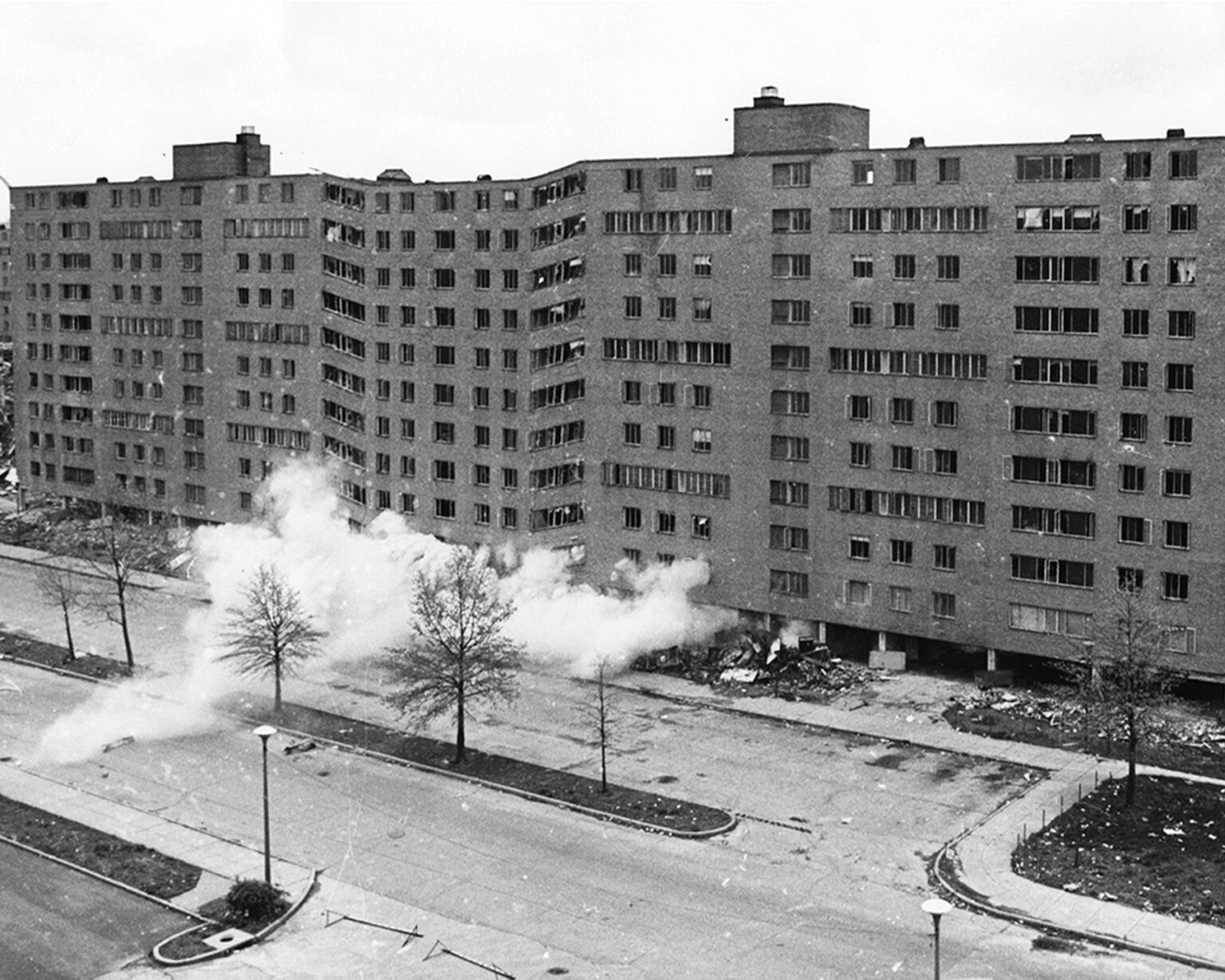
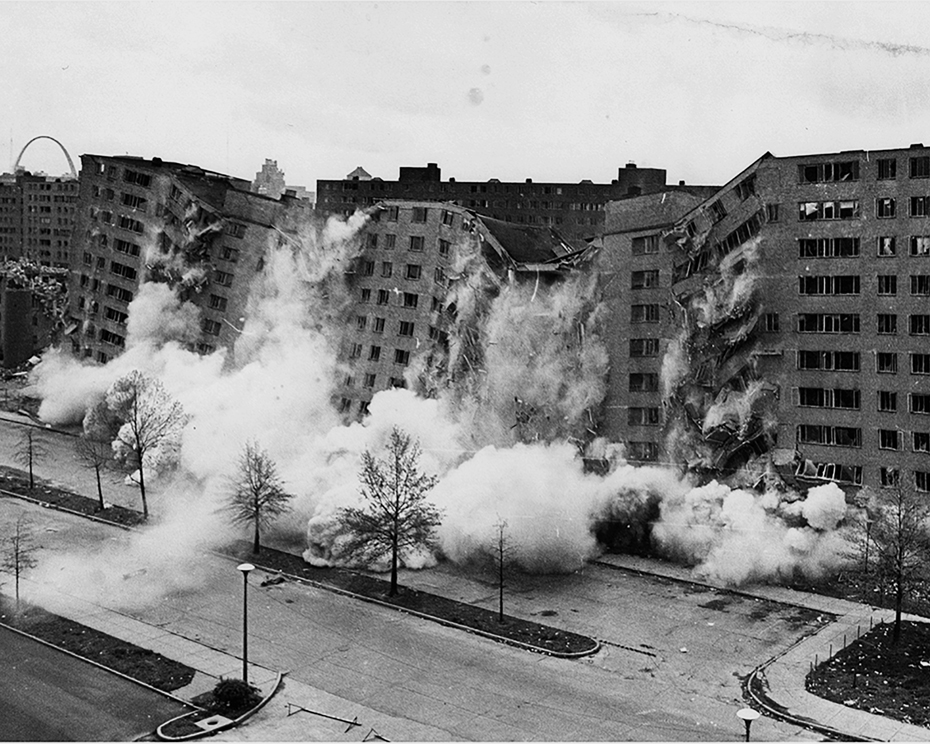
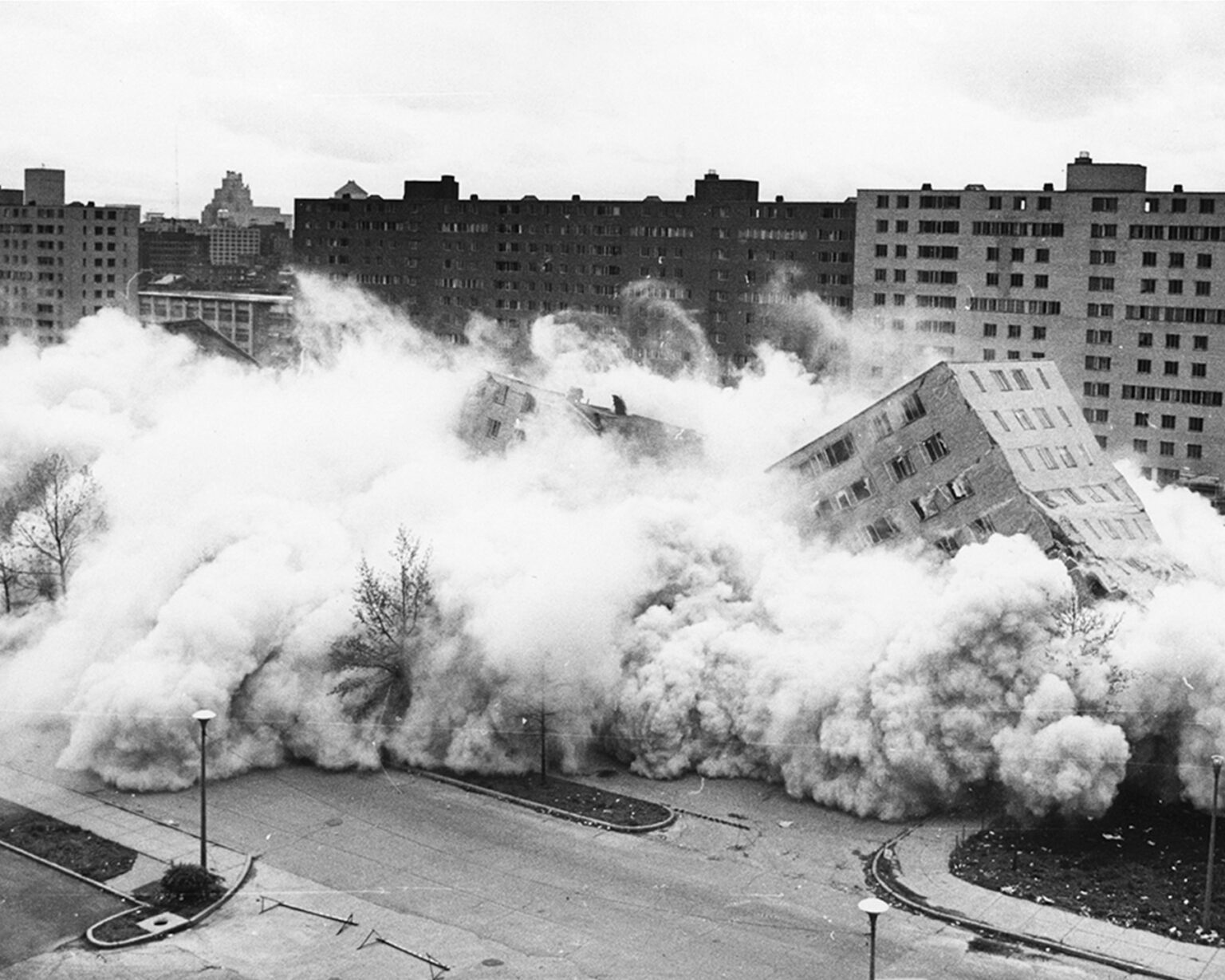
Image: The widely televised demolition of a Prutti-Igoe building. April 1972.
Emerson’s theory proved partly true in the final moments of the symposium, in which Year 3 and Year 4 students (from ages 8 to 10) from the nearby Collingwood College shared via video their opinions on what makes a good city and what could make a successful tall building. Some were humorous, clearly derived from their parents’ personal gripes (a disproportionate number of kids appear concerned with the availability of parking spaces), while others exhibited a strong sense of empathy and inclusion, listing accessibility, cultural diversity and accommodation for the homeless as their priorities – more than some city councils can say. In the end, it’s the reflections of the Collingwood College students that provoked the liveliest discussions at the symposium. While some dismissed the children’s views as naïve, impractical, even utopian, others took Gehl’s position: if a city is accessible for children and the elderly, it is likely to be more liveable (yes, that word) for everyone else (Gehl, 2010).
“Vertical occupation comes with a responsibility,” Sofia von Ellrichshausen said in the closing discussions. “We can’t think of it as private property – tall buildings need to be public space.” Just like the Starliner Tower in ‘Shivers’, self-contained and contextually barren tall buildings may as well be luxury cruises far out at sea, and their architects (to borrow an Ada-Louise-Huxtablism) “rearranging deck chairs on the Titanic” (Huxtable, 1982). If anything, the ‘Tall Buildings’ symposium proved how easy – and often warranted – it is for conversations around vertical urbanism to descend into doom and gloom. An engagement with the problems of tall buildings is essential to meaningfully addressing them; likewise, if a paradigm shift is to materialise even slightly, we must acknowledge that those problems extend far beyond the realm of architecture – there are much larger political and economic forces at play. At the same time, the potential for new, expressive architecture to buoy up fresh ideas cannot be ignored. Informed but creative, even schmaltzy experiments are vital in the evolution of any urban context – and tall buildings are no exception.
Cover image: The Shard (user: epistola8 / wikimedia commons / cc by-sa 4/0)
The Shard is a 95-story super tall skyscraper, designed by the Italian architect Renzo Piano, in Southwark, London. It is currently the tallest building in the United Kingdom and stands 309.7 metres tall.