An essay by Tanya Patrick on valuing the natural world
Published in
Landscape as Protagonist
Changing the conversation on the role of landscape in built projects.
When we try to pick out anything by itself, we find it hitched to everything else in the universe.
– John Muir, Nature Writings (1997, 245)
The rise of the plant kingdom preceded the world in which humans could live. From their beginning as freshwater algae around 3.8 billion years ago, plants have expanded their territories, invading and making one habitat after another their own (Willis 2016).
We don’t know how many species of plants there are for sure, and we are still discovering the astonishing range of ecological niches they inhabit. Every year, almost 2000 plant species are ‘discovered’ and described, many of which are already on the verge of extinction (Willis 2017). Plants can even be found on the coldest, windiest, driest continent on Earth – Antarctica. In a place where humans have no chance of permanently residing, 500-year-old verdant green moss forests emerge from their winter snow blankets over summer.
Because plants lead such different lives from the ones we experience, and often over different time scales to our own, the many intricacies of their lives remain hidden. Others have been, for a long time, quite literally beyond our reach. More people have been to the top of Mount Everest than have been to the top of the world’s tallest and largest living beings: trees up to 40 storeys tall and as old as the Parthenon (almost 2500 years old), such as the coastal redwood (Sequoia sempervirens).
Botanist and pioneering tree climber Stephen Sillett describes his first experience of climbing these trees as feeling like “he had gone inside the body of a living organism, with uncounted other organisms living inside it” (Preston 2007, 24). Amid this other world in the sky, where soil can be more than 90cm deep, he discovered a labyrinth of ferns, mosses and lichens of every conceivable shape – “drippy, frizzy, frilly, powdery, crusty, stringy and hairy” – in a series of hanging gardens composed of trunks that have fused to form walkways, where redwoods begin to grow on other redwoods, 90 metres in the air (Preston 2007, 24). Fewer than 20 years ago the crowns – the upper canopies – of these and other tall trees were thought to be bereft of life. Yet, Sillett and others have encountered an array of new plants and animals – and most of these species seldom, if ever, grow on the forest floor below (Sillett 2014).
From vegetal diversity, human life germinated. Plants have allowed our very human being and helped us to become the dominant species we are today. Ironically, as we are finding more and more ways to understand and explore their silent world, we are at the same time confronted by increasingly pressing problems related to the way in which we perceive and interact with plants. Time and time again, staggering statistics on species loss and ecological degradation reveal that the dominant cultures that have shaped the way in which we inhabit the Earth suffer from a form of ‘plant blindness’. This term is used to describe the chronic inability to recognise the importance of plants to the biosphere and human existence.
When Europeans arrived in Australia, old-growth stands (a stand is a community of trees) of this land’s tallest tree, the mountain ash, would have taken up 60 to 80% of the total forest area. Today the same figure sits at just 1.16% (Lindenmayer 2016). These plants were cleared to make way for the settler humans: forests were felled for wood; fields of grasses and wildflowers were cleared for grazing and European forms of agriculture… Wild plant–human cohabitation practised by Indigenous societies for tens of thousands of years was pushed aside, seemingly in line with the current dominant belief that humans are separate from nature. These statistics mimic a recent global census of all life on Earth. Humans weigh in at just 0.01% of the planet’s biomass. Plants were revealed as our planet’s heavyweights, accounting for 82% of all life, but human activity has chopped that number in half over the last 10,000 years (Bar-On, Phillips and Milo 2018).
Scientist and author Robin Wall Kimmerer points out the worrying fact that today’s children “can recognise 100 corporate logos but fewer than ten plants” (Tippet 2016, 13:58), concluding that children are not paying attention. But, to be fair, neither are the adults. When you consider that humankind is sitting on the edge of a new geological epoch, where we are simultaneously insignificant at a biomass level, yet utterly dominant in terms of our mass eradication of other species, it might be a good time to tune in.
Old growth
In Australia, we acknowledge the awesome nature of the mountain ash, Eucalyptus regnans – otherwise known as the Tasmanian oak, if you are on the floor of a furniture store – by giving individual trees names that recognise their grandeur, such as Centurion, El Grande and Medusa. And yet we continuously fail to consider their importance.
Renowned for its smooth, straight trunk, Eucalyptus regnans is the largest flowering plant on Earth. From January to March, white flowers like pompoms dot the upper part of its canopy. In towering elders of more than 100 years, hollows form and pools of water collect in the branches as the wood decays. These high-rise ponds provide homes to reptiles, insects and frogs, and water for mammals and birds. At dusk, the critically endangered Leadbeater’s possum leaps from tree to tree. As Don Watson conveys eloquently in The Bush, they are home to many Australian songbirds: “Especially in the early morning, a gully in a mountain ash forest might easily be mistaken for the nursery of the whole extended singing family… Their sweet friendly calls, their balletic nectar-sipping sensuality, their brilliance were hints of another dreamed-about dimension” (2014, 6).
These trees grow in the cooler, wetter parts of Victoria and Tasmania, where fires are not so frequent – but still inevitable. The mountain ash has evolved like other eucalypt species and, as the poet Les Murray put it, needs to “shower sometimes in Hell” (2010, 37): only intense bushfires can crack and thus deploy the seeds shed from the woody fruits in the canopy.
Paradoxically, while its name regnans, from the Latin word for ruling, alludes to its height and forest dominance, it lacks some of the adaptations to fire typical to its species, and the ‘mother’ tree is almost always lost. The age of a stand of mature trees can only ever be dated to the last intense bushfire (Moore 2018).
The lives of these monarchs of the eucalypt genus tell at once stories of extraordinary plant ecosystems beyond our everyday human experience and our attempts to value them.
By climbing into the crowns of big trees – which are some 75 metres deep – and measuring them centimetre by centimetre, Sillett discovered that tall trees, including the mountain ash, grow faster when they’re older than when they’re younger, right up until their death. To wander through these forests is to spend time among some of the most carbon-dense, living skyscrapers on Earth (Keith et al. 2009). Far from being towering relics, the elders of the species are more like silent powerhouses of carbon capture and storage. The invisible nature of the transaction, though, is perhaps a bit abstract for some.
Invisible too, but much more immediately tangible, is the positive role that mountain ash trees play in providing something we all need to stay alive: fresh water. In Melbourne’s water catchment, hydrology research shows that the amount of water that flows from the ash forests is related to forest age (Vertessy et al. 1998). In another case of the elders doing the heavy lifting, catchments dominated by large, old trees yield almost twice the amount of water each year as those covered with young forests aged 25 years (Vertessy 2001).
Is it even possible to calculate the economic value of a tree standing in a forest? Likely not. But we continue to try.
A study by David Lindenmayer, Heather Keith, Michael Vardon, John Stein, Chris Taylor and others from the ANU Fenner School of Environment and Society in 2017 was the first to use the United Nations’ System of Environmental–Economic Accounting (SEEA) to join the dots between the economy – in this case, native forestry – and environmental values, such as Melbourne’s water supply, national parks and carbon storage. Economics journalist Ross Gittins has written in praise of the system, which “extends our long-standing way of measuring the economy (to reach gross domestic product) to include our use of natural resources and ‘ecosystem services’ – the many benefits we get from nature” (Gittens 2019).
For example, we as consumers pay a price for water delivery to householders, but the supplier doesn’t pay for the water that entered the dam. That water itself is an ecosystem service created by forests and the atmosphere. Attaching economic value to ecosystems like mountain ash forests acknowledges – in an economic sense, at least – the role they play in supplying water to our burgeoning cities.
The Fenner group’s SEEA-based study focused on contested ground: the Thomson catchment, which contains 60% of Melbourne’s water supply. The security of the water supply for the city’s increasing population is an ever-present concern, particularly as decreases are projected in rainfall and streamflow as a result of climate change. In 2018, researchers concluded that Victoria’s mountain ash forests are now undergoing an ecological collapse due to wildfires and over-logging (Lindenmayer and Sato 2018). Unlike in the rest of the native forests in Melbourne’s catchment, where logging is banned, mountain ash in the Thomson catchment are still clear-fell harvested every 60 to 120 years from stands that have been growing since the last great bushfire in 1939 (Parliament of Victoria 2017).
It’s a story of humans biting – or cutting off – the hand that feeds us. By logging these forests we are putting at great risk the water supply we need to survive.
The study showed that in 2013–14, the annual economic value of water supply to Melbourne was $310 million, about the same as the value of its agriculture, while its tourism was worth $260 million. Native timber production, considered to be the main ‘product’ of trees, was worth just $12 million (Keith et al. 2017).
Of course, the economic benefits and trade-offs of ecosystem services are only part of the picture. Another ANU scientist, Emma Burns, believes we are irreparably altering the forest ecosystem. Australia has more hollow-dwelling creatures – such as the Leadbeater’s possum – than anywhere else, and we acknowledge that by protecting older trees. But Burns says that when “we [only] protect the old trees with the hollows… we [also] need to be protecting the regrowth that’s coming on stream. It’s like we’re protecting the grandparents, but the middle population that you would need to replace yourself is being wiped out” (quoted in Wahlquist 2017).
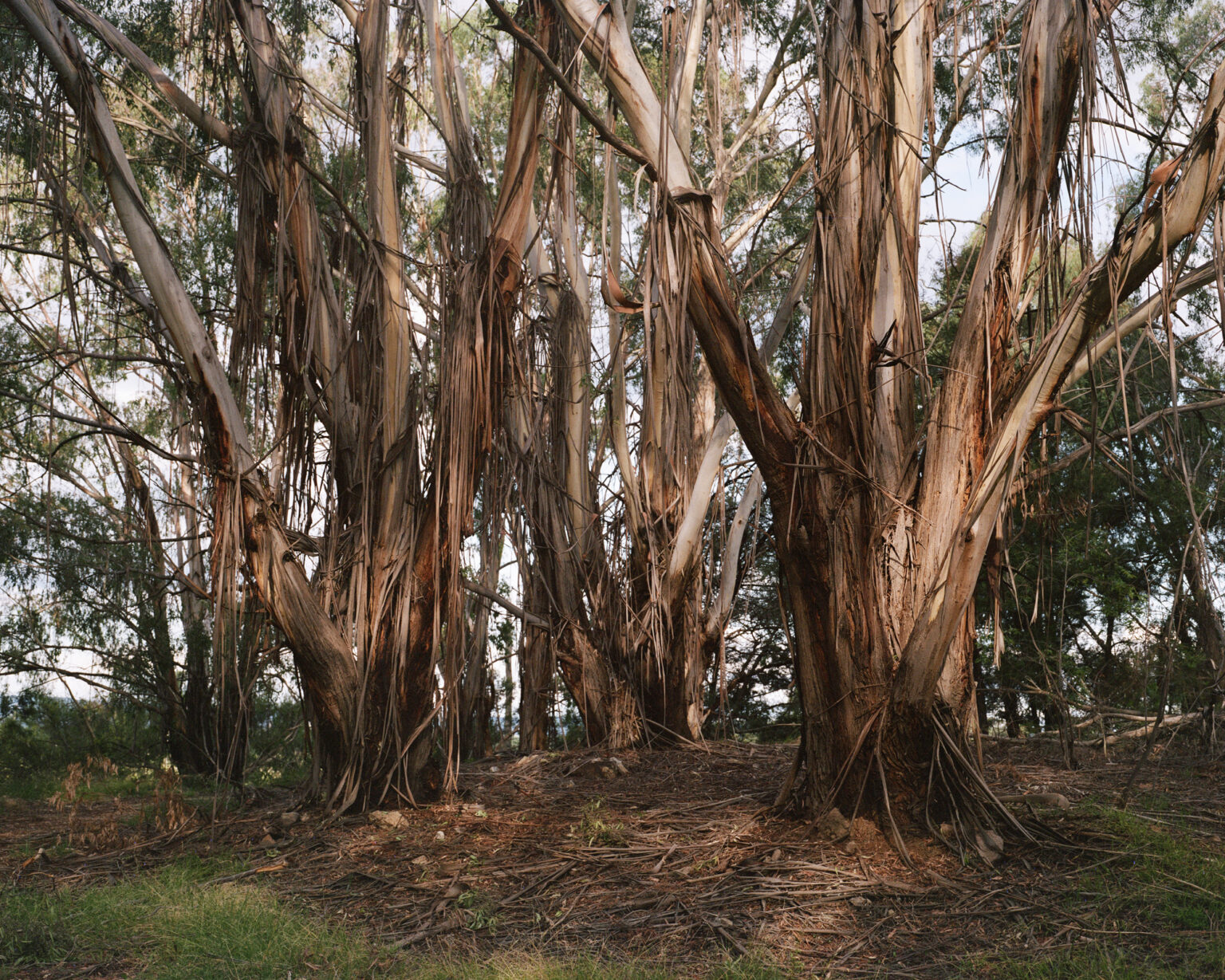
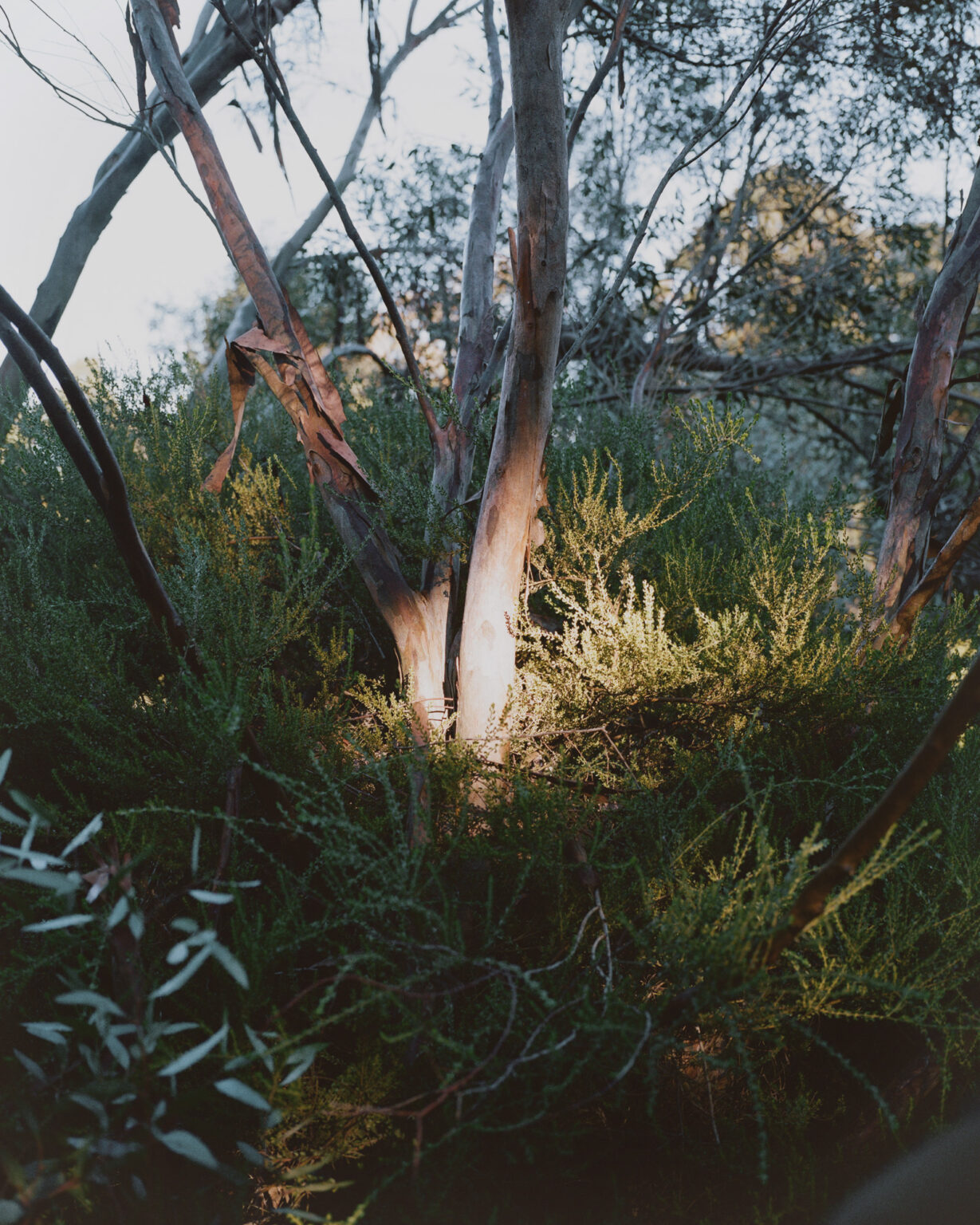
Image: A stand of Manna Gums at the Jerrabomberra Wetlands, Canberra
Sphagnum moss
In distant mountains high above our cities, where the accumulation of cold air and water across rolling valleys inhibits the growth of trees, a rich miniature plant world flourishes. High-country bogs and the waterways that they feed rely heavily on a more modest plant, at least in scale: sphagnum moss. Sphagnum moss, which resembles yellowish-green carpet, literally underlies the whole bog and can only be seen along streamlines, where cross-sections of hummocks may be 70cm high and 3000 years old (Fraser 2011). The lower layers of dead moss are compacted as peat. Kimmerer, author of Gathering Moss: A Natural and Cultural History of Mosses (2003), explains how sphagnum moss can hold up to 20 times its own mass of water, by way of a unique cellular trick. Ninety per cent of the cells in a sphagnum plant are dead: they are made to be empty so they can be filled up with water.
Not only do the lives of the streams depend on these mosses but so, too, do the lives of the teeming masses of people in cities downstream. The sponge-like qualities of the moss ensure that the water is released slowly into the river systems so that they run steadily in wet times and in drought, preventing the low-flow systems which favour the growth of potentially harmful blue-green algae. Algal blooms deplete oxygen in the water, and were one of the major causes of the massive fish deaths in the Lower Darling in January 2019 (Murray Darling Basin Authority 2019).
Even within the narrow scope of human preservation, this precious and ancient plant ecosystem is surely worth preserving. But it’s currently being sacrificed for a national myth. The sphagnum bogs are being carved away by the hard hooves of ever-increasing numbers of feral horses (horses were introduced to Australia early in colonisation: in 1788 with the First Fleet) – known in Australia as brumbies. Channels form in the trampled moss, and the resulting erosion and changes to natural drainage patterns can ultimately lead to bogs drying out.
At face value the New South Wales government’s dithering response to this unfolding tragedy represents a classic standoff between what Don Watson (2014) calls ‘book learning and bush lore’. On one side are conservationists and scientists, whose research shows that the horses destroy sensitive and important alpine ecosystems at the origin of our major rivers. They propose a reduction in the number of horses by culling their numbers down from an estimated 8000 to 600. On the other, the brumbies’ supporters argue for the horses’ protection based on their perceived historical importance, immortalised in poems by Banjo Patterson and in Elyne Mitchell’s fictional book and series of the same name, The Silver Brumby (Mitchell, 1958). They may be missing the point, however, as these works describe the seasonal removal of brumbies from the high country.
Relationships and knowledge
What is at risk of being lost in the stories of sphagnum moss and the mountain ash requires a complex deciphering of the symbiotic relationship between humans and nature. Plants are so ubiquitous that we rarely stop to consider the impact they have on our lives: from the sustenance they provide to the way they regulate the amount of oxygen and carbon dioxide that we breathe. We are quick to forget our indebtedness to plants and our interconnectedness with them. Too often we value plants as products or primary materials: as food, medicine, building supplies, as air purifiers and beings to contain in pots to beautify our lives.
How can we make true and proper valuations on these beings without this knowledge? And what are we really losing with the death of each species and ecosystem?
In Australia, we have an opportunity to rebalance and grow our understanding of plants, by looking to Indigenous cultures whose observations and philosophies set humanity in nature, not above it. Koori Elders and clans recently gathered in Walgalu high country to perform a Narjong, a water ceremony, to invoke the sacred duty of caring for the river systems – a tribal responsibility for thousands of years (O’Mallon 2019). The ceremony also drew attention to the damage being done to Kosciuszko’s high-country bogs by feral horses. Even with the seemingly pertinent information about sphagnum moss destruction and water quality, current and past plant judgements are proving questionable. Laws protect the heritage value of the brumbies, an animal that has only been in the Snowy Mountains for about 180 years. Why has this decision been made before we have ensured the protection of vital environmental heritage that these introduced animals put at risk?
Also present at the Narjong ceremony was author and researcher Bruce Pascoe, who is of Bunurong, Yuin and Cornish heritage. “To wonder about the trajectory of modern civilisations is not to sneer at private enterprise or scientific enquiry but to wish those energies were directed in such a way that they do not destroy the planet”, writes Pascoe in his book Dark Emu (2014, 225).
Much of the Western world’s comprehension of the plant kingdom stems from the knowledge that plants are, for the most part, perfectly adapted to be in one place, evolving over time to best exploit the conditions in which they live. We understand this as the theory of natural selection, first published in Charles Darwin’s On the Origin of Species (1859), and now considered to be the foundation of evolutionary biology. What Darwin further realised was that these conditions are not simply those of geography and climate, but are also related to those species we live alongside. While Darwin’s insights explain how this web of life came about, 150 years later formal science is still only just scratching the surface when it comes to understanding the interconnections between different forms of life – particularly so for plants.
There’s a quickening around this subject, with books like Peter Wohlleben’s The Hidden Life of Trees (2016) and Richard Powers’ The Overstory (2018); Powers’ epic tale about the wonderful life and alarming death of trees recently won the 2019 Pulitzer Prize for Fiction. We find hope for a broader cultural awareness of the value of plants in the growing prominence of these books, and others, that either weave scientific research through a narrative or illuminate it through storytelling. Powers’ revelation that trees are ‘social creatures’ bears more than a passing resemblance to the real-life work of forest ecology professor Suzanne Simard of the University of British Columbia. Her research shows how trees in undisturbed forests communicate with one another, often and over great distances. Just like our tech networks, the information is carried underground, not by fibre-optic cable, but by fungi.
Millions of spider web-like threads called mycelia, the vegetative part of a fungus, are the main characters in this story. Simard explains that “there can be hundreds of kilometres of mycelium under a single footstep” (2016, 10:15). They infiltrate the soil, weaving into the fine tips of a tree’s roots at a cellular level. This silent, underground collaboration between plants and fungi is called mycorrhizae: itself a joining of the Greek words for fungus (mykós) and root (riza).
Fungi–mycorrhizae wiring transports water, carbon, nitrogen, phosphorus and other currently classified information between plants. We do know that in most instances, the association is mutually beneficial. Plants have greater access to sunlight, and through photosynthesis they produce carbon-rich sugar, which is sent to the fungi for its food supply. The sugar fuels the fungi as they scavenge the soil for water and nutrients. In return, the fungi increase the size of the plant’s root ball, so it can better soak up water and nutrients. They also act as a kind of extended nervous system that connects separate plants.
The vast interconnectedness of these networks has given rise to the term ‘wood wide web’. But we are only just starting to piece together some of the things that these fungal superhighways can do. In 1997, Simard found one of the first pieces of the puzzle. She used radioisotopes to trace carbon moving along the mycelia between a Douglas fir and a paper birch tree (Simard et al. 1997). When she shaded one tree, reducing its ability to photosynthesise, carbon-based sugars flowed into it from the other tree. Remarkably, rather than competing for resources – (goodness, what would Darwin say? – the trees were sharing them across the fungal network.
In later experiments, Simard – who comes across as a formidable blend of good instincts and restrained spirituality – wondered if Douglas fir trees could distinguish their own kin. It turns out they can. She’s identified what she calls hyperlinked ‘hub trees’: the biggest, oldest trees in the forest with the most fungal connections. In conversation she switches the labelling to ‘mother trees’. Although they are not necessarily female, she clearly sees them in a nurturing, maternal role. They have greater access to sunlight, and so can send more carbon below ground. They even reduce their own root structure “to make elbow room” for their children (Simard 2016, 12:07).
When mother trees send excess carbon through the mycorrhizal network to the sunlight-starved understorey seedlings, seedling survival increases fourfold. If this weren’t remarkable enough, when mother trees are injured or dying, “they send messages of wisdom on to the next generation of seedlings” (Simard 2016, 12:18). Using isotope tracing, Simard has tracked carbon, as well as defence signals, moving from an injured mother down her trunk and into her neighbouring seedlings. She concludes that this can “increase the resistance of those seedlings to future stresses” (Simard 2016, 12:25).
How many trees are talking to one another? Inside a study plot of Douglas fir, just 30 metres square, Simard and a graduate student used DNA analysis to show that one tree was linked to 47 others, thanks to eight individuals of one fungus species and three of another (Simard et al. 2012).
Is the most significant finding of this study the fact that, within their narrow focus on a single tree species and two species of fungi, they found such a large network? The plot contained a much greater diversity of both trees and fungi, and when you consider that mycorrhizal associations occur not only in trees but also in shrubs and grasses – possibly all plant species – the true potential complexity of these underground networks is mind-blowing.
When Peter Wohlleben ponders Simard’s research and other studies that speak to the astounding sociality of trees, he finds wisdom in the way trees nourish their own kind, as well as their competitors. If you can get past the anthropomorphism, you can take his messages a long way from the forest: “an organism that is too greedy and takes too much without giving anything in return destroys what it needs for life and dies out” (Wohlleben 2016, 113).
Plants undoubtedly endure. We can see this in the gnarled, twisted trunks of the bristlecone pine, the world’s longest lived (known) tree species. The oldest living bristlecone pine, living quietly in the White Mountains in California, began its life before the first Egyptian pyramids were constructed some 4500 years ago. We can see evidence of plants’ tenacity and ability to adapt and thrive, especially in our absence. In the post-apocalyptic landscape of the 1986 nuclear disaster, the Chernobyl fallout zone turned into an enchanted forest, for example. Here, abandoned buildings decay amid the flourishing of a wild, resurgent nature. The radioactive moss silently pushing up through cracks in crumbling asphalt is a reminder that plant life will go on without us.
References
Bar-On, Yinon M., Rob Phillips, and Ron Milo. 2018. “The Biomass Distribution On Earth.” Proceedings Of The National Academy Of Sciences 115, no. 25 : 6506-6511.
Darwin, Charles. 1859. On the Origin of the Species. London: J. Murray.
Fraser, Ian. 2011. A Bush Capital Year. Melbourne: Commonwealth Scientific and Industrial Research Organisation (CSIRO).
Gittins, Ross. 2019. “How To Lose Water, Waste Money and Wreck the Environment.” The Age, 5 March. Accessed 21 June, 2019. https://www.smh.com.au/business/the-economy/how-to-lose-water-waste-money-and-wreck-the-environment-20190305-p511ti.html.
Keith, Heather, Brendan G. Mackey, and David B. Lindenmayer. 2009. “Re-Evaluation of Forest Biomass Carbon Stocks and Lessons from the World’s Most Carbon-Dense Forests.” Proceedings of the National Academy of Sciences 106, no. 28: 11635-11640. doi:10.1073/pnas.0901970106.
Keith, Heather, Michael Vardon, Janet Stein, and David Lindenmayer. 2017. “Experimental Ecosystem Accounts for the Central Highlands Of Victoria.” Canberra: Fenner School of Environment and Society, The Australian National University.
Lindenmayer, David. 2016. “The Importance of Managing and Conserving Large Old Trees: A Case Study From Victorian Mountain Ash Forests.” Proceedings of the Royal Society of Victoria 128, no. 1: 64-70. doi:10.1071/rs16006.
Mitchell, Elyne. 1958. The Silver Brumby. London: Hutchinson.
Moore, Gregory. 2018. “Mountain Ash Has a Regal Presence: The Tallest Flowering Plant in the World (Beating Around the Bush).” The Conversation, 1 June. Accessed 21 June, 2019. https://theconversation.com/mountain-ash-has-a-regal-presence-the-tallest-flowering-plant-in-the-world-96021.
Muir, John. 1997. Nature Writings. New York: The Library of America.
Murray Darling Basin Authority. 2019. “Fish Deaths in the Basin.” Murray Darling Basin Authority. Accessed July 6, 2019. https://www.mdba.gov.au/managing-water/drought-murray-darling-basin/fish-deaths-basin.
O’Mallon, Finbar. 2019. “Ancient Rite, Modern Fight: How Brumbies Are Breaking the Landscape.” Sydney Morning Herald. 10 March. Accessed 10 March, 2019. https://www.smh.com.au/environment/conservation/ancient-rite-modern-fight-how-brumbies-are-breaking-the-landscape-20190308-p512nw.html.
Parliament of Victoria. 2017. “Inquiry Into Vicforests Operations.” Melbourne: Legislative Council Economy and Infrastructure Committee.
Pascoe, Bruce. 2014. Dark Emu. Broome: Magabala Books.
Powers, Richard. 2018. The Overstory. First edition. New York: W. W. Norton & Company.
Preston, Richard. 2007, The Wild Trees. London: Allen Lane.
Sillett, Stephen, and Marie Antoine. 2014. “Lichens and Bryophytes in Forest Canopies”. In Forest Canopies, 2nd ed., eds. Margaret Lowman and Bruce Rinker. 151-174. Massachusetts: Elsevier Academic Press.
Simard, Suzanne. 2016. “How Trees Talk To Each Other.” TED Talks. Online video. Accessed June 20, 2019. https://www.ted.com/talks/suzanne_simard_how_trees_talk_to_each_other.
Simard, Suzanne W., David A. Perry, Melanie D. Jones, David D. Myrold, Daniel M. Durall, and Randy Molina. 1997. “Net Transfer of Carbon Between Ectomycorrhizal Tree Species in the Field.” Nature 388, no. 6642: 579-582. doi:10.1038/41557.
Simard, Suzanne W., Kevin J. Beiler, Marcus A. Bingham, Julie R. Deslippe, Leanne J. Philip, and François P. Teste. 2012. “Mycorrhizal Networks: Mechanisms, Ecology and Modelling.” Fungal Biology Reviews 26, no. 1: 39-60. doi:10.1016/j.fbr.2012.01.001.
Tippet, Krista, host. 2016. “Robin Wall Kimmerer: The Intelligence in All Kinds of Life.” On Being With Krista Tippett (podcast). 25 February. Accessed 24 February, 2020. https://onbeing.org/programs/robin-wall-kimmerer-the-intelligence-in-all-kinds-of-life-jul2018/.
Vertessy, Robert, Fred Watson, Sharon O’Sullivan, Richard Benyon, Sharon Davis, Richard Campbell, and Shane Haydon. 1998. “Predicting Water Yield from Mountain Ash Forest Catchments.” Cooperative Research Centre for Catchment Hydrology Centre Office, Department of Civil Engineering, Monash University. Accessed December 9, 2019. https://ewater.org.au/archive/crcch/archive/pubs/pdfs/industry199804.pdf.
Vertessy, Robert, Fred Watson, and Sharon O′Sullivan. 2001. “Factors Determining Relations Between Stand Age and Catchment Water Balance in Mountain Ash Forests.” Forest Ecology And Management 143, no. 1-3: 13-26. doi:10.1016/s0378-1127(00)00501-6.
Wahlquist, Calla. 2017. “Victorian Logging Could Trigger Ecosystem Collapse, Researchers Say.” The Guardian. 1 December. Accessed 21 June, 2019.
https://www.theguardian.com/australia-news/2017/dec/01/victorian-logging-could-trigger-ecosystem-collapse-researchers-say.
Watson, Don. 2014. The Bush: Travels in the Heart of Australia. Melbourne: Hamish Hamilton.
Willis, Kathy. 2016. Botanicum. London: Big Picture Press.
Willis, Kathy. 2017. “State Of The World’s Plants 2017.” Royal Botanic Gardens Kew. Accessed 25 February, 2020. http://stateoftheworldsplants.org/2017/report/SOTWP_2017.pdf.
Wohlleben, Peter. 2016. The Hidden Life of Trees. Carlton: Black Inc.
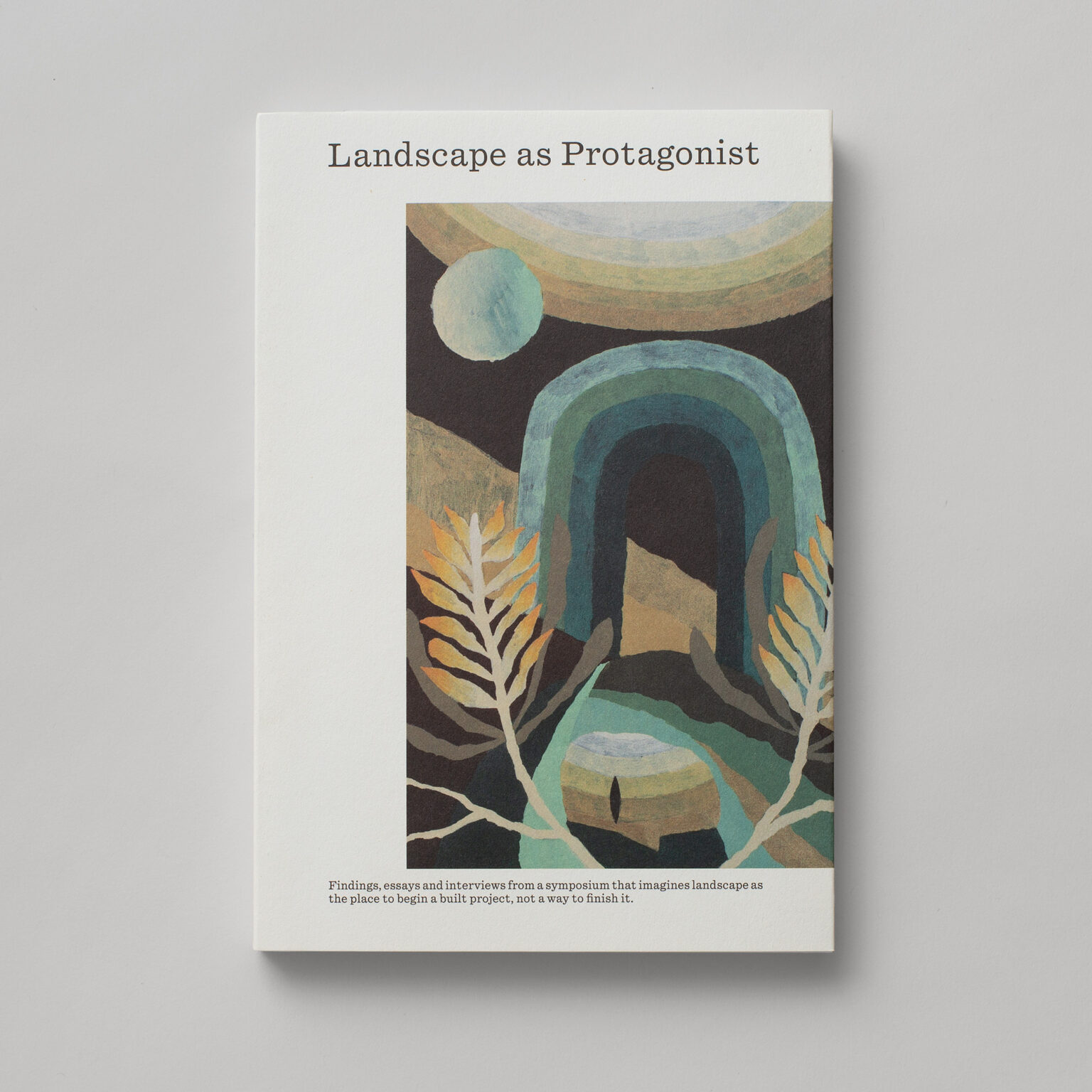
This essay was originally published in Landscape as Protagonist, a book of discussions and findings from the symposium of the same name, held as part of Melbourne Design Week. It features interviews with Thomas Doxiadis, Marjetica Potrč and Dan Pearson and essays by Bruce Pascoe, Tanya Patrick, Katherine Sundermann, and Andrew Reynolds. Illustrations by Al Stark. A Molonglo publication, edited by Stéph Donse. Available here.
We asked science writer Tanya Patrick to consider the symposium finding: “the system doesn’t value nature correctly”. Patrick’s essay reminds us that we may still only be scratching the surface when it comes to even knowing which plant species live on Earth… let alone their mechanisms, the intra and inter-species connections they practise, and their overwhelming importance to the biosphere.