A brief geological history of Dairy Road by Michelle Cooper
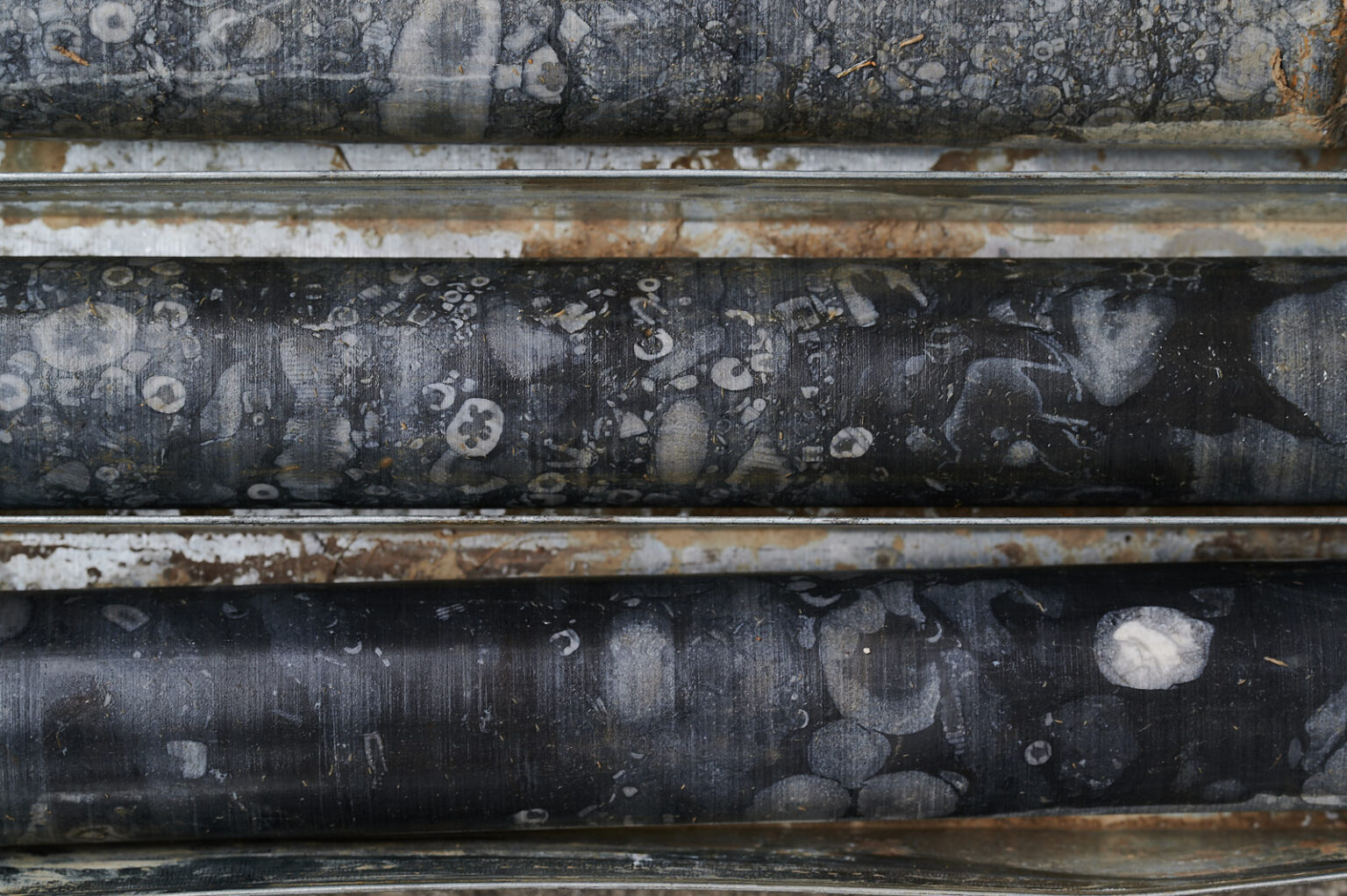
Image: Details of Dairy Road core samples taken from 48 to 59 metres below the ground. The cores consist of limestones and show numerous fossils including tabulate corals, brachiopods and crinoids. Image by Rohan Thomson.
The geology around Canberra (Koyanberra) was created about 480 million years ago, during the Ordovician period of Earth’s history (between 485 and 444 million years ago). At this time, large amounts of sandstone, siltstone and shale were deposited throughout the region. The area we now know as the Australian Capital Territory (ACT) was located offshore and well east of what was then the margin of a large landmass called Gondwana.
Some 50 million years later, during the Silurian period (from around 444 million years ago to 419 million years ago), the ACT was still underwater, however the water depth was shallower and the water was warmer, because the landmass was located near the equator. The coastline was not that far away to the west.
Three things were happening:
1. Large amounts of sediment were being washed into the shallowing ocean that would one day become Canberra. These sediments formed the sandstones, siltstones, mudstones and limestones now found around much of the northern parts of Canberra, including Black Mountain (Galambary), State Circle, the Parliamentary Triangle, Narrabundah and Dairy Road.
2. Volcanic lava began erupting from a number of explosive volcanic centres around the ACT, particularly over the southern parts.
3. The first plants were beginning to occupy the land, thanks to a climate that was stable and warming, and there was rapid change in the diversity of marine animals and the expansion of these creatures into new environments.
Since those formative years the landscapes around Canberra and the ACT have been shaped and deeply eroded to reveal the rocks we now see that make up Canberra.
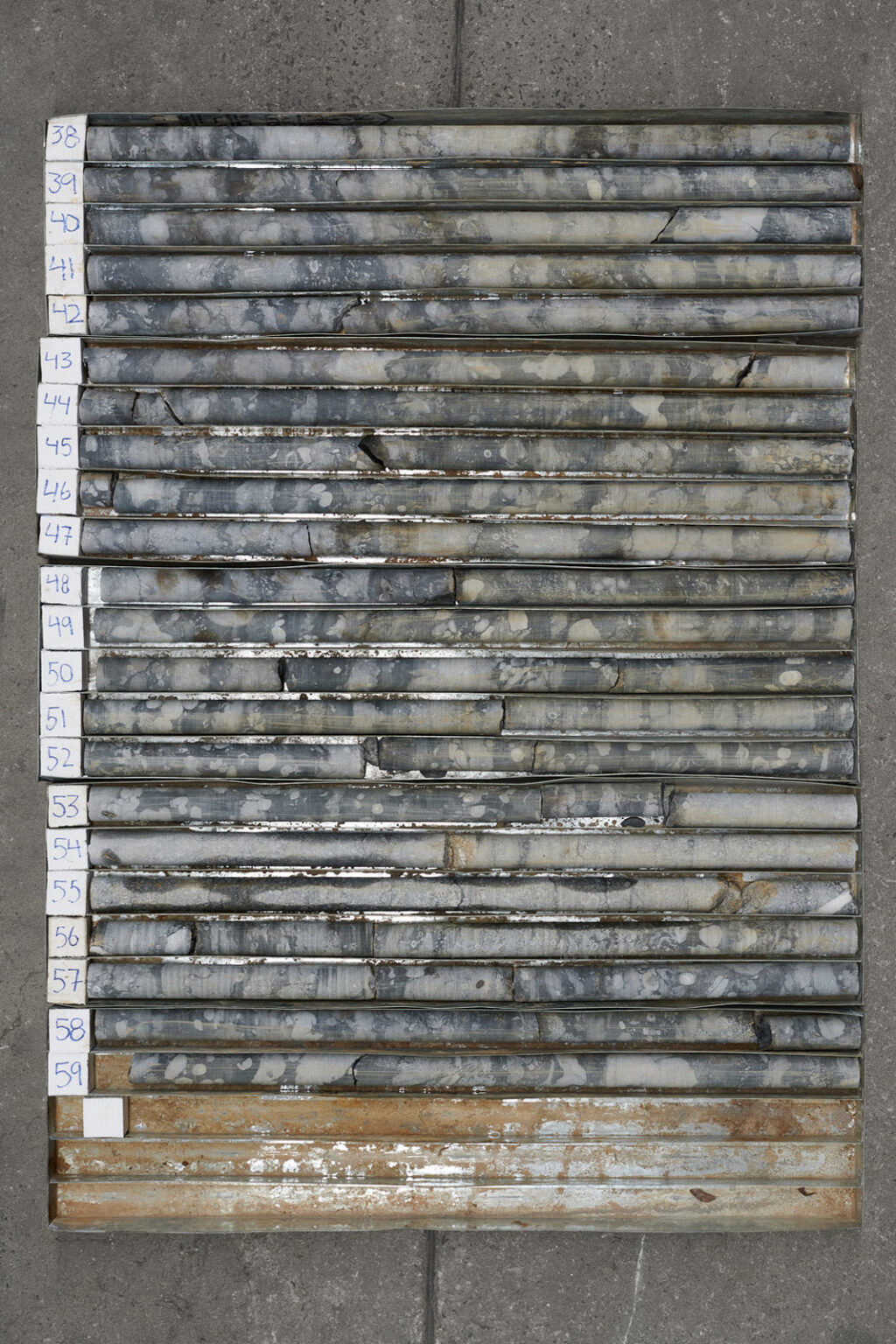
Image: Dairy Road core samples taken from 48 to 59 metres below the ground. The cores consist of limestones and show numerous fossils including tabulate corals, brachiopods and crinoids. Image by Rohan Thomson.
A recent geotechnical survey of Dairy Road took core samples from 60 metres below the ground. The samples consist of limestones for almost the entire section. There is younger soil and alluvium at the top, which was deposited over the last 1 million years as the Molonglo River slowly eroded its way through the landscape.
The Dairy Road core also contains a large quantity of various fossils, which tells us about what the environment was like at the time of formation.
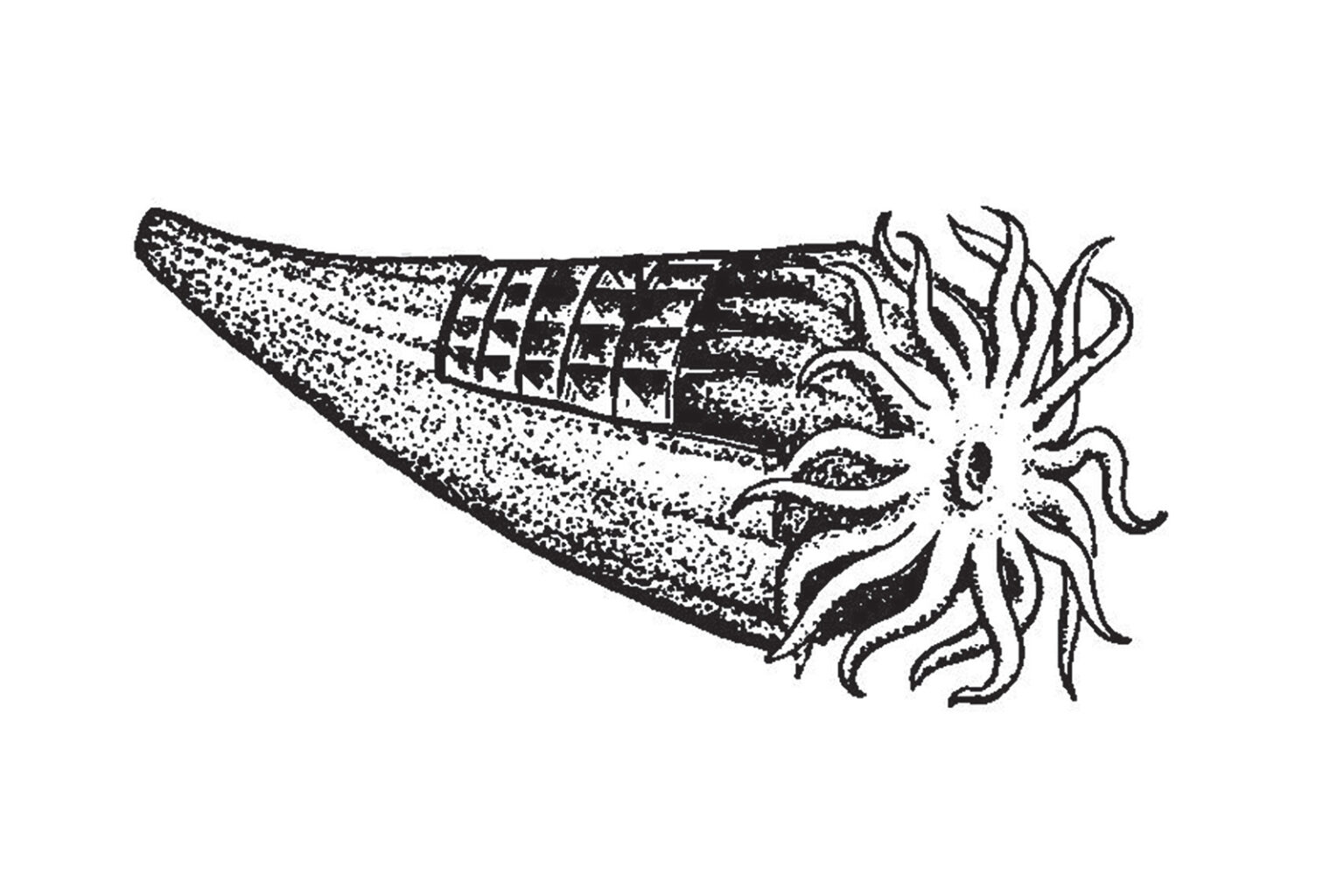
Image: Tabulate coral reference illustration.
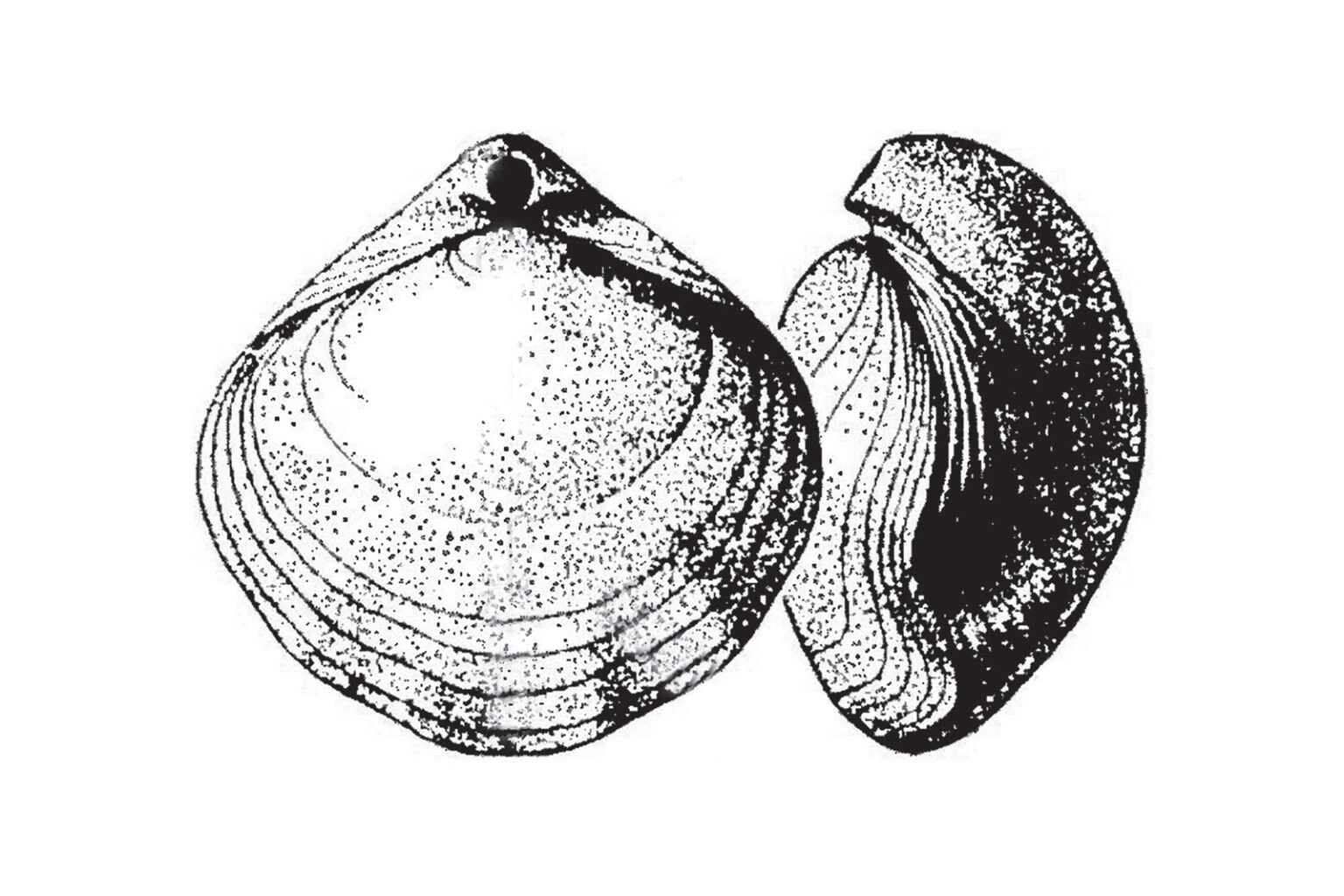
Image: Brachiopod reference illustration.
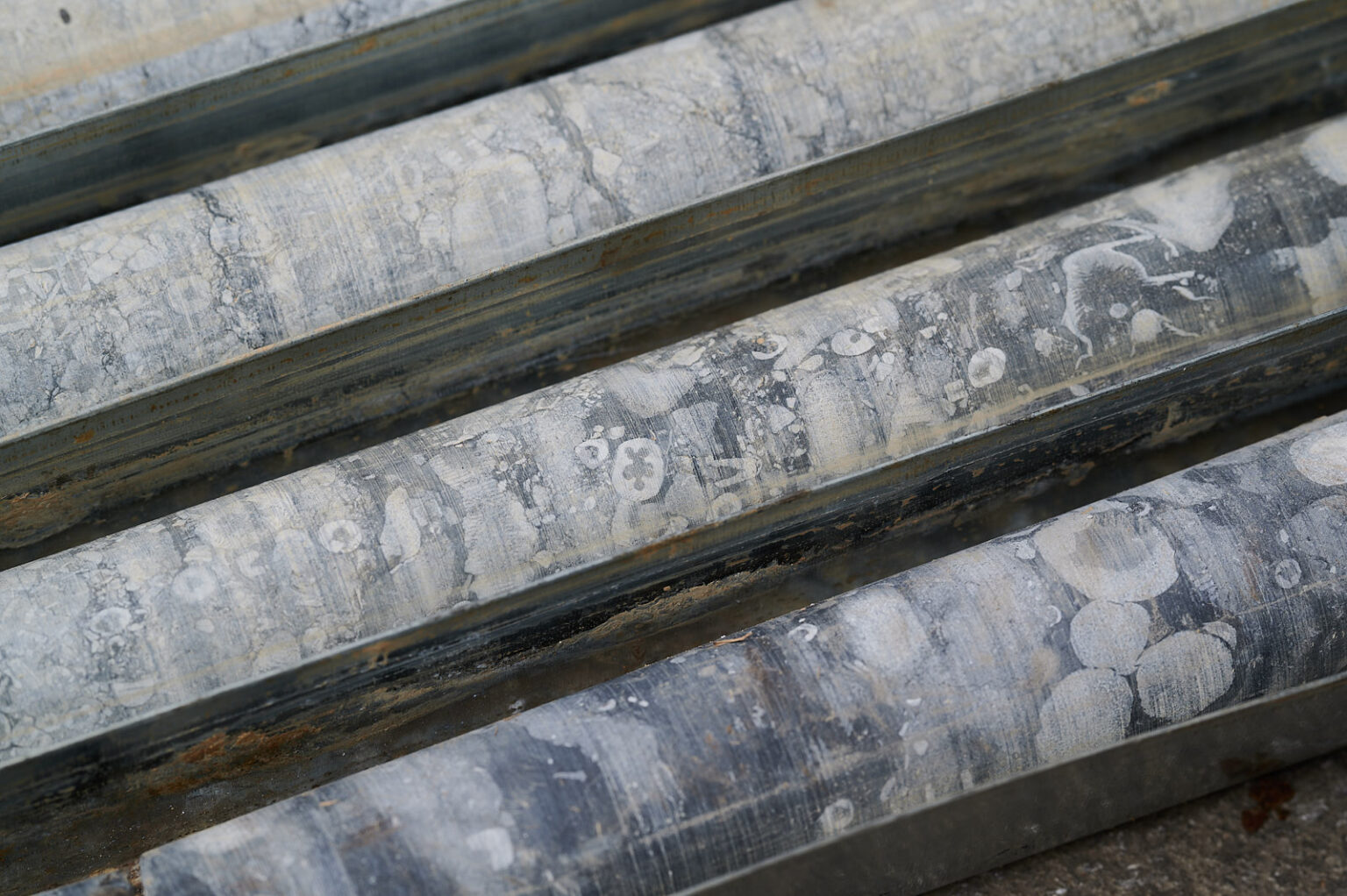
Image: Dairy Road core samples. Image by Rohan Thomson.
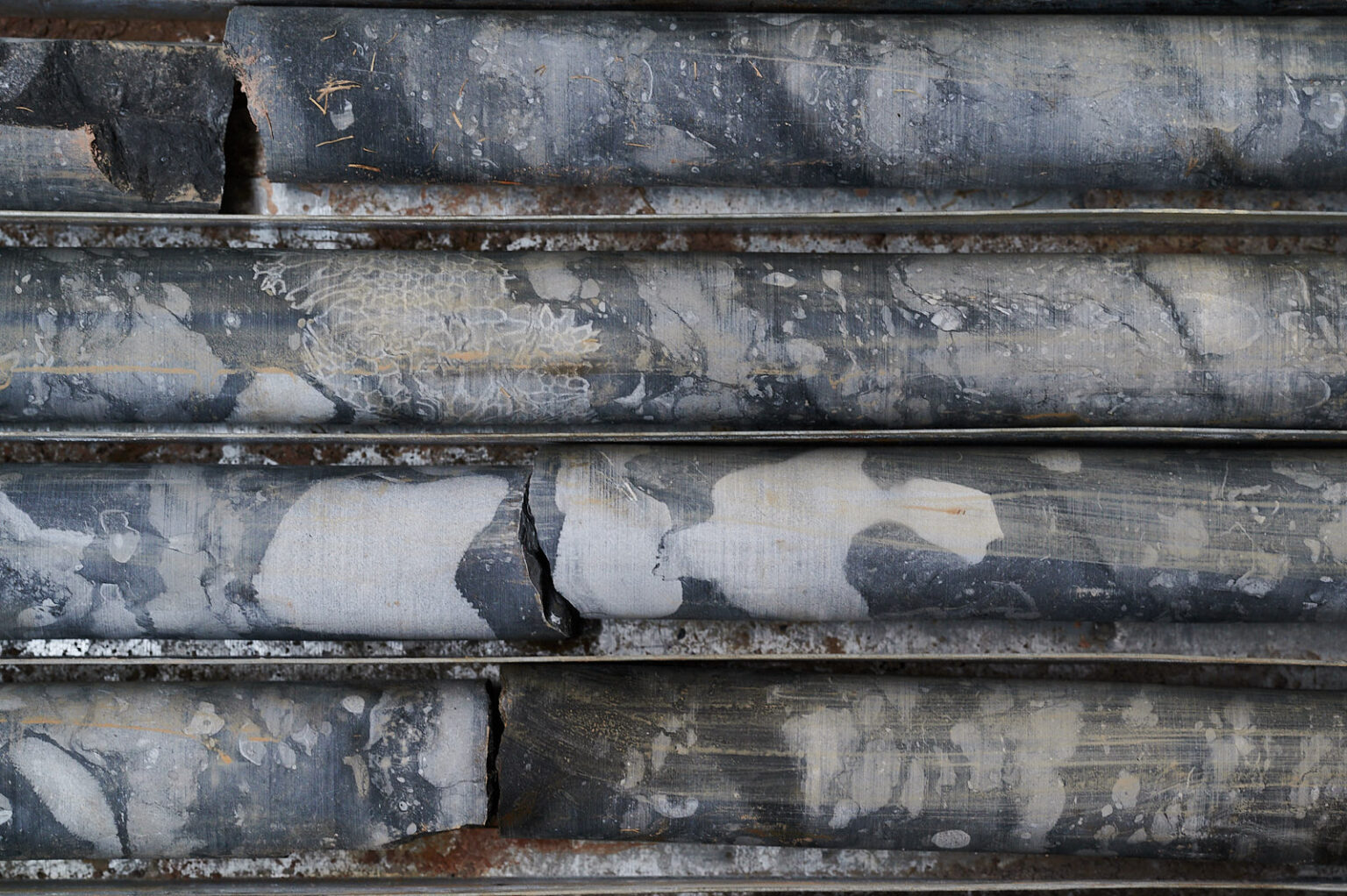
Image: Dairy Road core samples. Image by Rohan Thomson.
Fossils are the remnants of plants or animals. When a plant or animal dies, the remains are usually totally destroyed. However sometimes, and particularly if the remains fall into water then settle into sand, mud, clay or carbonate, the soft parts are destroyed but the hard bones or shell are preserved in the sediment. Over time, more sediment is deposited over the top and this slowly turns the sediment into rock.
In the case of Dairy Road, the original material was a coral reef. Fossils identified in the core include tabulate corals, crinoids (or sea lilies) and brachiopods (shells).
Tabulate corals are corals with horizontal internal partitions known as tabulae. Most tabulate corals form large colonies, and some species form substantial reefs. They were common corals from the Ordovician to the Permian periods, however they became extinct at the end of the Permian, about 245 million years ago, during the largest mass extinction ever.
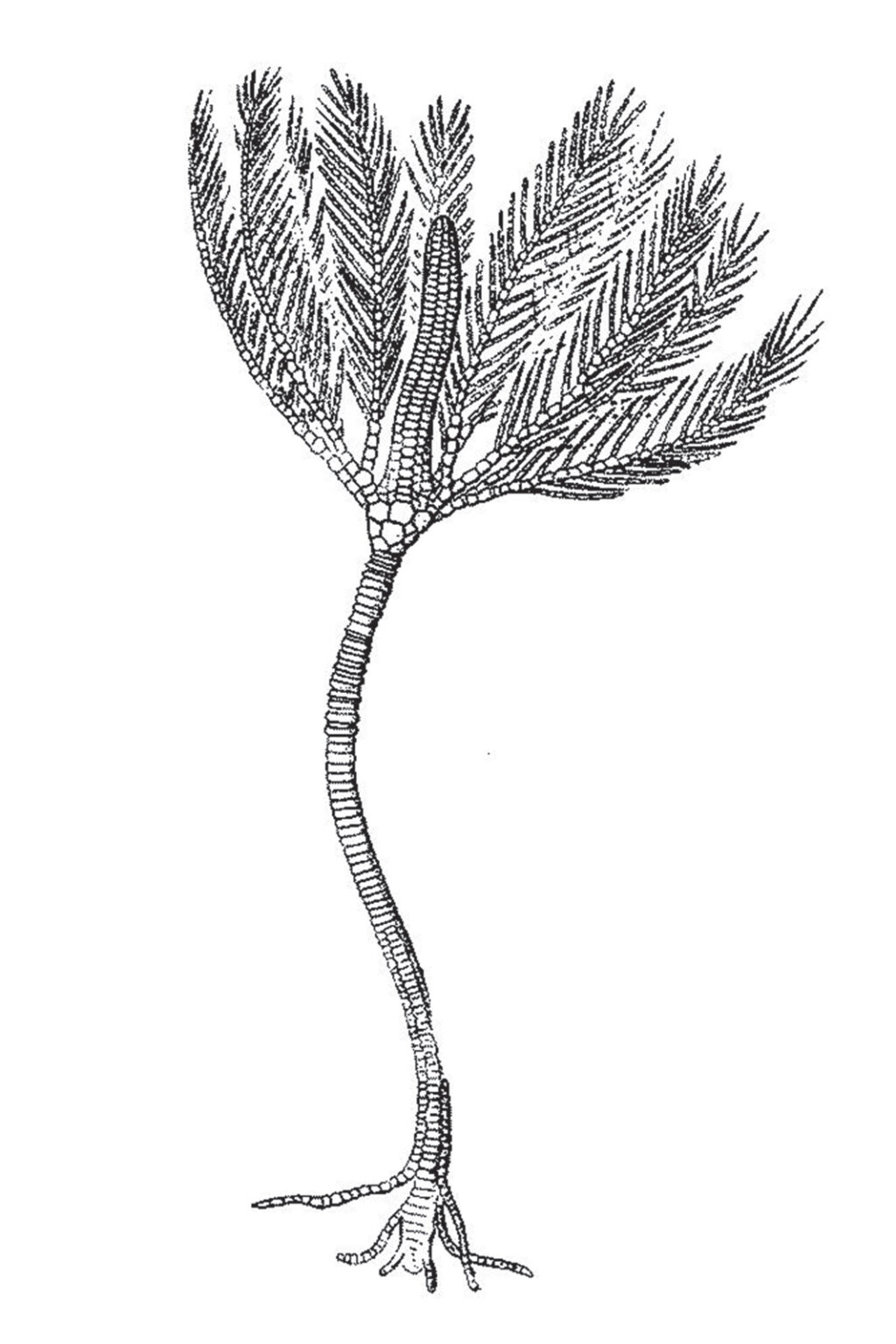
Image: Crinoid reference illustration.
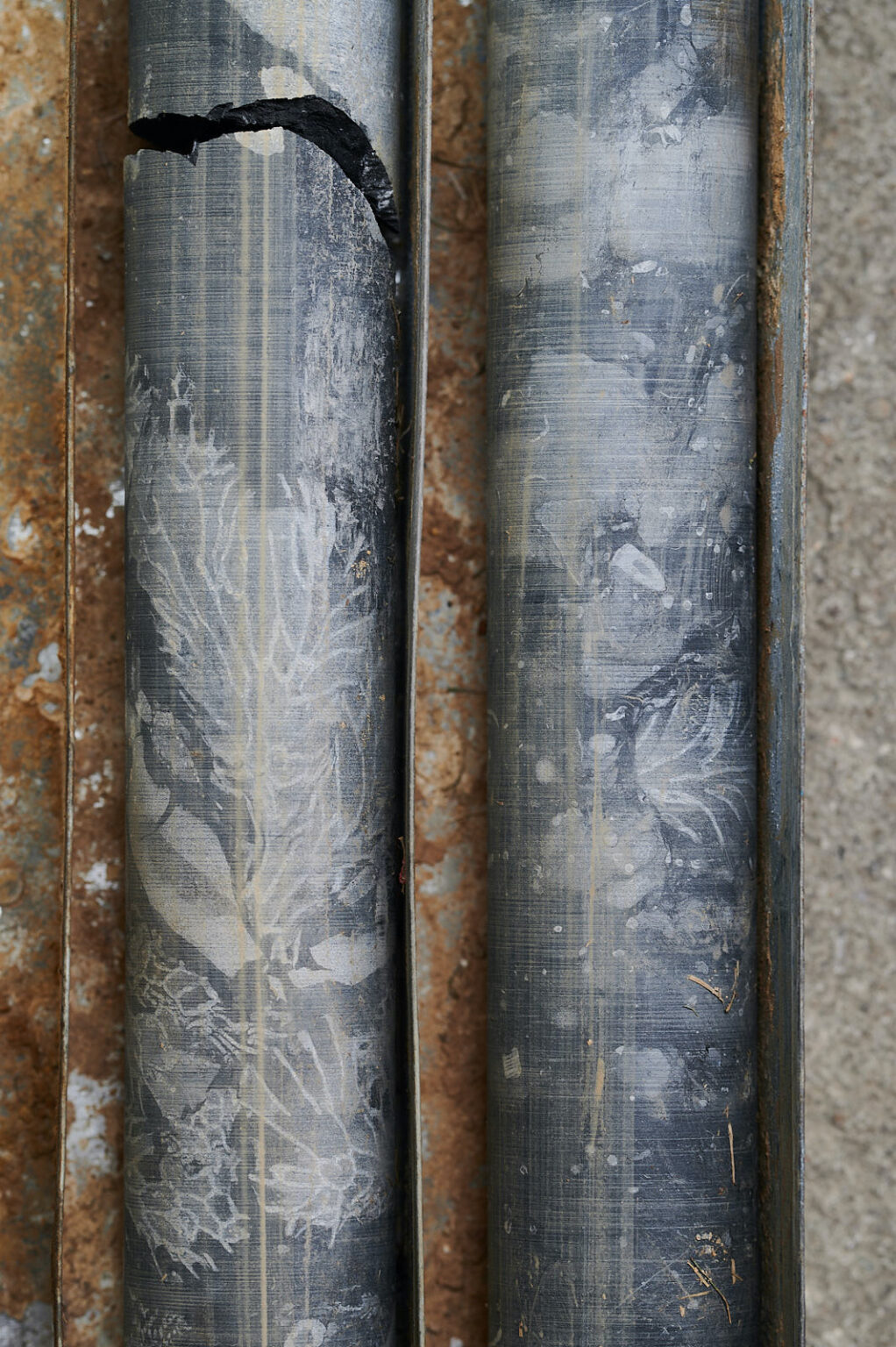
Image: Dairy Road core samples. Image by Rohan Thomson.
Crinoids are an ancient fossil group; some of which still survive today. They first appeared about 500 million years ago. Crinoids are actually echinoderms (a marine invertebrate animal, which includes the starfish, sea urchin and sea cucumber). Even though they are animals, they are sometimes called sea lilies. The body lies in a cup-shaped exoskeleton made of calcium carbonate plates. Its stalk is made of calcium carbonate plates and its long arms also have a plated exoskeleton and are used to capture food particles.
Brachiopods are another marine invertebrate. They have an even longer history of life on Earth. They first appeared at least 550 million years ago and several of their descendants are still alive. They were particularly common between 540 million years ago and 250 million years ago.